Backyard Patio Decor Ideas: How to Create a High-End Sanctuary in Your Own Backyard
This post dives into the best ideas for how to create a functional outdoor patio area that you’ll want to use everyday.
Whether you are working with a compact urban courtyard or a sprawling backyard, a well-designed patio serves as the ultimate bridge between indoor comfort and the beauty of the outdoors. This guide explores a range of inspiring patio concepts, from budget-friendly industrial DIYs and cozy bohemian retreats to high-end architectural pavilions. You will discover how to effectively zone your space for dining, lounging, and cooking while using materials like natural stone, textured masonry, and ambient lighting to create a cohesive, low-maintenance sanctuary tailored to your lifestyle.
What’s Inside:
- Design Styles: A breakdown of modern-industrial, classic suburban, and tropical-resort aesthetics.
- Functional Zoning: Tips for integrating outdoor kitchens, bar areas, and private relaxation nooks.
- Material Selection: Choosing the right pavers, decking, and furniture for durability and style.
- Atmospheric Elements: How to use layered lighting, vertical greenery, and textiles to transform any paved area.
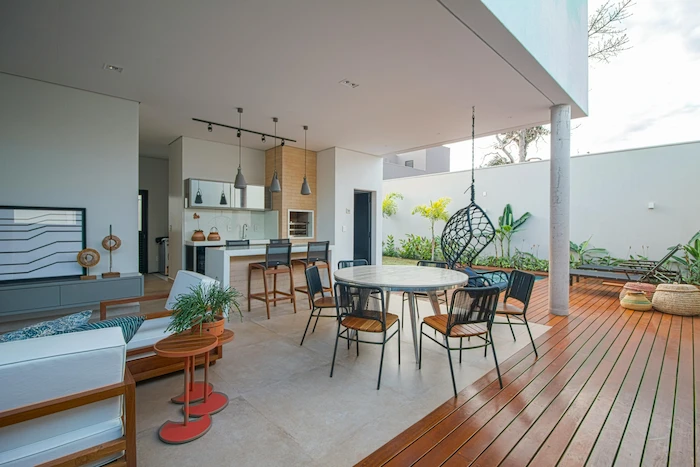
What is a Patio?
A patio is a ground-level outdoor living space that is connected to the home. It is usually built from durable materials like stone or concrete. A patio provides a low-maintenance area for dining and relaxation.
Depending on the pavers chosen, a patio functions as a versatile hub for outdoor living. It serves as a durable setting for family dining, a dedicated lounge for relaxation, and a seamless transition between the home and garden. Additionally, it provides a practical foundation for functional elements like outdoor kitchens, barbecues, and container gardening (NT Pavers).
Common Patio Uses
- Social & Dining: A primary spot for gatherings and meals.
- Leisure: A comfortable zone for lounging.
- Integration: A bridge connecting indoor spaces to the landscape.
- Utility: A sturdy base for cooking and gardening features.
Better Homes and Gardens suggest making sense of a large patio by breaking it into zones. They recommend using a large rug to mark the seating zone as distinct from the rest of the patio.
Covered and Uncovered Patios
A patio can be either covered or uncovered, but a “covered patio” specifically features a roof or structure providing shelter from the sun and rain. While traditional patios are open-air, adding a roof, pergola, or canopy transforms them into a protected, year-round living space.
“Retractable awnings, big market umbrellas, built-in pergolas, wrought-iron patio covers, and any variety of shade structures are available and they are improving year over year,” says Los Angeles–based landscape designer Andrea Scharff for Architectural Digest).
Key Differences and Features
- Covered Patio: Provides full or partial protection with a roof, often made from materials like Colorbond, polycarbonate, or wood, sometimes attached directly to the house.
- Uncovered Patio: A traditional, open-air paved area.
- Pergola vs. Patio: A traditional pergola is an open-roof structure (often with beams), though they are often covered in modern designs.
- Verandah: Similar to a covered patio but always attached to the house and often found at the front.
Benefits of a Covered Patio
- Protection: Shields against sun (UV rays) and rain.
- Year-Round Use: Allows for dining or lounging regardless of weather.
- Comfort: Keeps the area cooler in summer and drier in winter.
- Furniture Protection: Protects outdoor furniture from damage.
Common Covering Types
- Fixed Roof: Permanent solid structures (e.g., steel or timber).
- Polycarbonate Panels: Durable, allows light in while keeping rain out.
- Louvered Roofs: Adjustable slats to control light and ventilation.
- Retractable Covers: Flexible shading options, like awnings or shade sails.
Outdoor Fireplace: Architectural Minimalism
This design focuses on sharp lines, a dark color palette, and geometric precision.
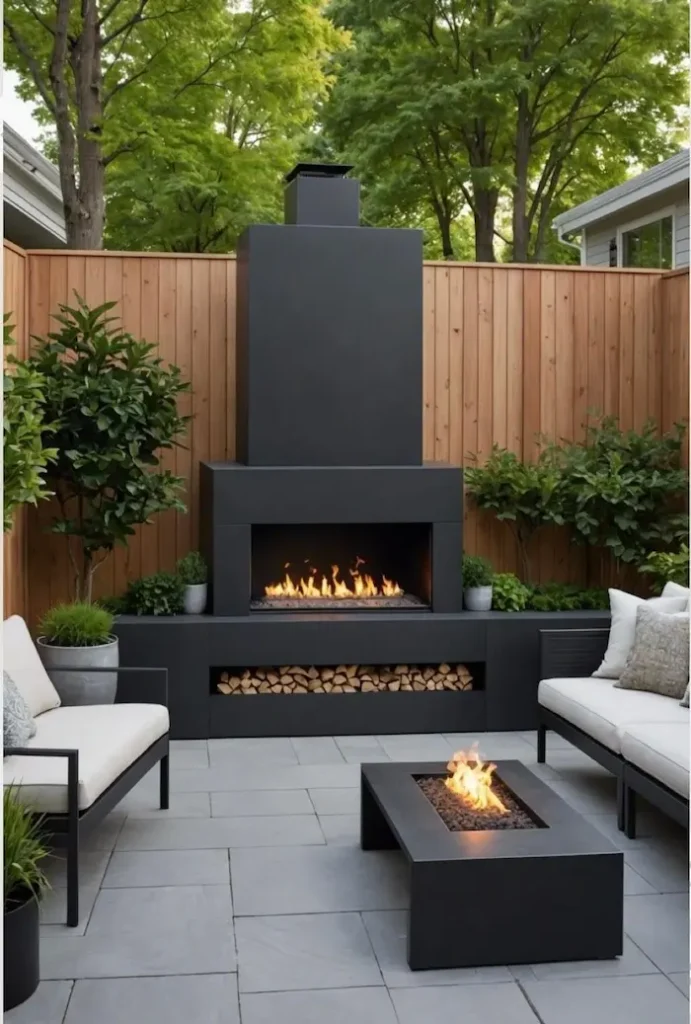
- Monolithic Fireplace: The oversized, matte black fireplace serves as a massive structural anchor. The built-in wood storage niche at the base adds a textural element to an otherwise smooth surface.
- Dual Fire Features: By pairing a large fireplace with a low-profile rectangular fire table, the space creates multiple points of warmth, making it ideal for larger gatherings.
- Material Contrast: The cool grey slate pavers and black furniture frames are softened by a vertical timber fence, which provides a warm, organic backdrop that prevents the space from feeling too “cold.”
- Symmetrical Layout: The twin sofas facing each other create a formal, conversational “outdoor room” that feels intentional and private.
Transitional Coastal Fireplace
This space uses softer curves, lighter tones, and traditional patterns to create a relaxed, high-end patio.
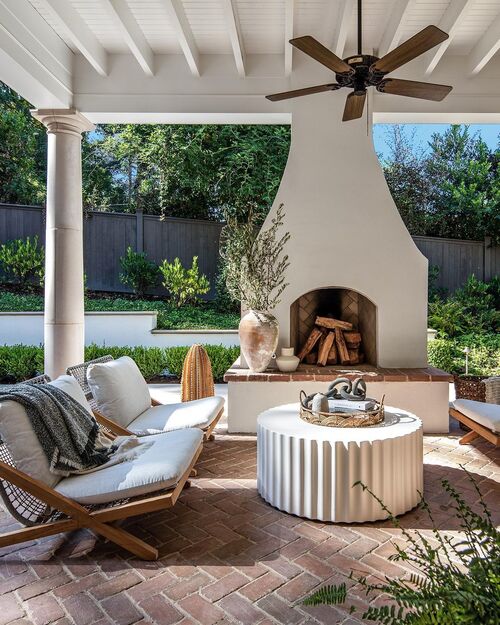
- Stucco Kiva-Style Fireplace: The white, curved fireplace adds a Mediterranean or coastal flair. The arched firebox and brick hearth provide a classic, cozy aesthetic.
- Herringbone Brickwork: The flooring features a sophisticated herringbone pattern in natural brick tones, which adds movement and a timeless quality to the design.
- Textural Layering: The fluted white coffee table, woven chair backs, and thick knit throws create a rich, tactile environment that emphasizes comfort.
- Permanent Shade: The structured pavilion roof with a ceiling fan ensures the space is usable in various weather conditions, blending the boundaries between indoor and outdoor living.
Include a BBQ in Your Patio
This patio is an excellent example of functional layering. By using rugs, lighting, and specialized furniture, it transforms a standard paved area into a multi-use living space that feels as intentional as an indoor dining room.
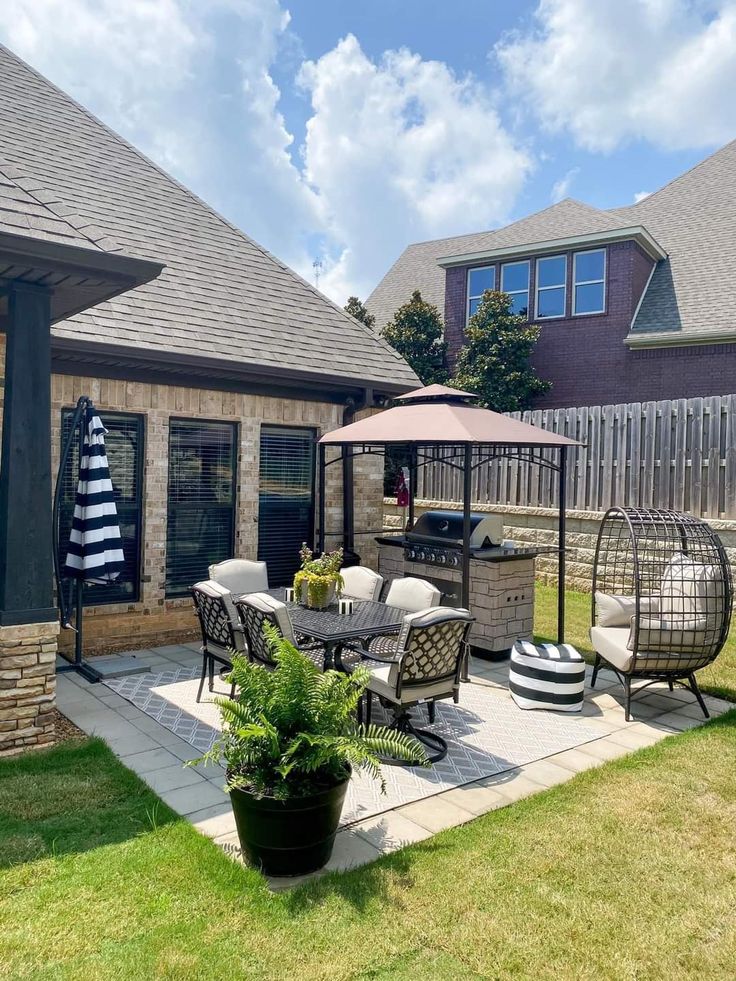
Key Features:
- Sheltered Grill Station: A built-in style barbecue is housed under a tiered metal gazebo, providing shade for the cook and protecting the equipment from the elements.
- Statement Furniture: A modern, woven hanging-style egg chair adds a contemporary touch and serves as a focal point for relaxation.
- Natural Boundaries: Large potted ferns and greenery are used to soften the edges of the stonework, creating a transition between the paved patio and the lawn.
Create an Outdoor Wine Bar
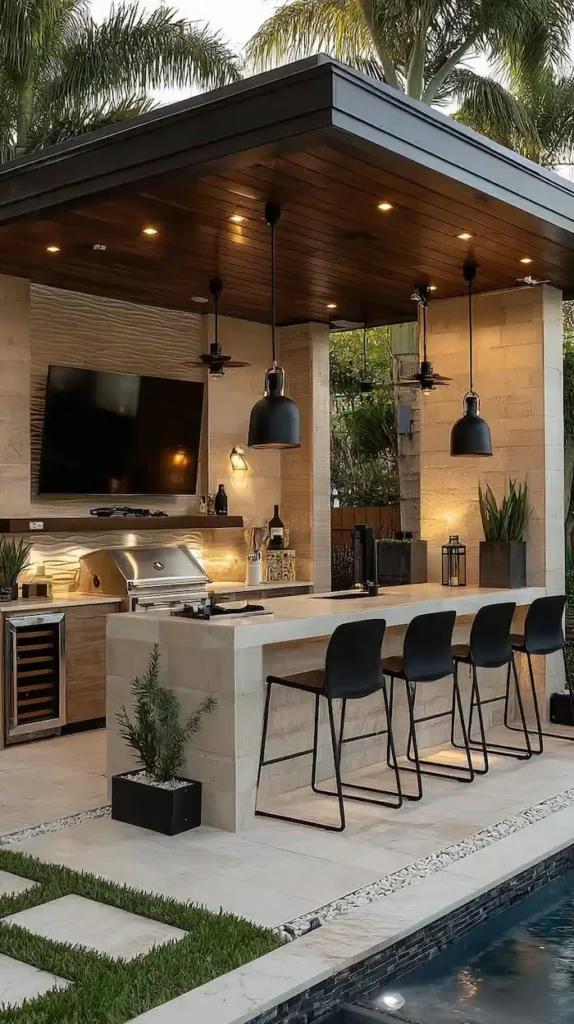
This image showcases a high-end, contemporary outdoor pavilion that functions as a fully integrated kitchen, bar, and entertainment lounge. It exemplifies “resort-style” living by utilizing architectural lighting and premium materials to create a sophisticated poolside retreat.
Key Functional Features
- Professional Outdoor Kitchen: The setup includes a premium built-in stainless steel grill, a dedicated wine fridge, and a large “waterfall” island that serves as both a prep surface and a breakfast bar.
- Integrated Technology: A large wall-mounted flat-screen TV is positioned as the focal point, making the space ideal for hosting sports viewings or movie nights.
- Layered Lighting Design: The ambiance is curated through a mix of task and mood lighting, including industrial-style black pendant lights, recessed ceiling spots, and small accent lanterns.
- Poolside Integration: The patio level sits flush with a sleek swimming pool, featuring a stone perimeter and manicured grass “steppers” that create a seamless flow between the water and the lounge.

Megamaster Stainless Steel 6-Burner Propane Gas Grill with Side Burner, Barbecue Grill with Temperature Gauge, 66,000 BTUs, 737 SQ. In. Cooking Area, Outdoor BBQ Grill for Backyard Patio – 720-0...
Create A Corner BBQ Kitchen Area
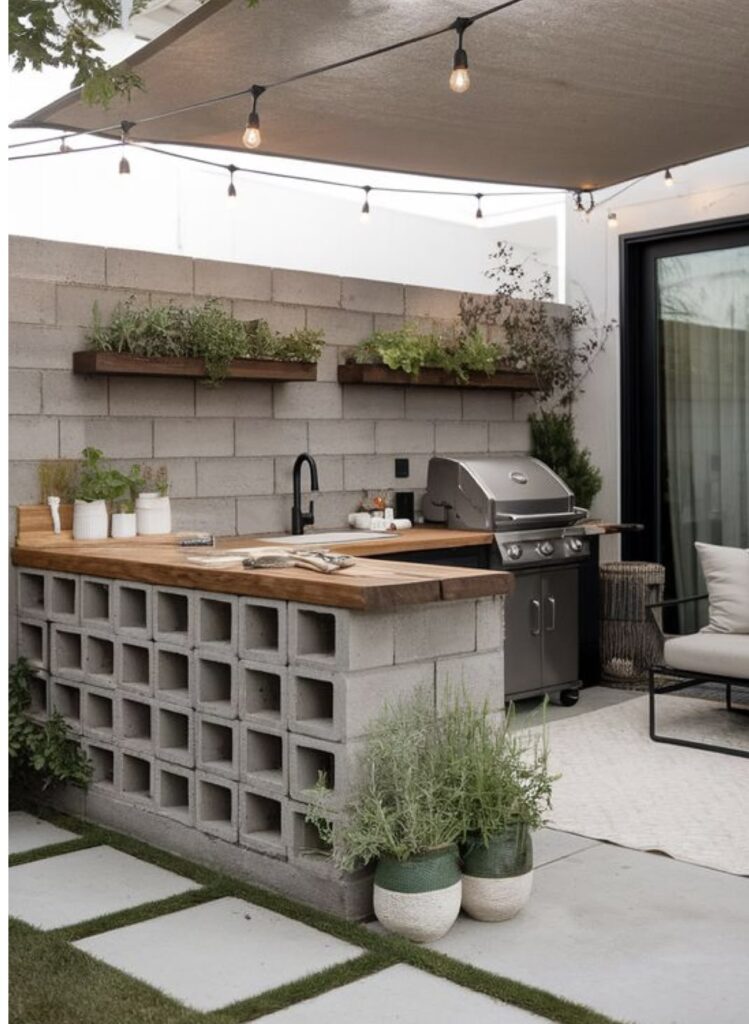
This design is a masterclass in budget-friendly luxury. By pairing inexpensive industrial materials like cinder blocks with high-end finishes like wood and matte black fixtures, it creates a sophisticated, low-maintenance outdoor “room.”
Key Functional Features:
- Multi-Zone Living: The space transition smoothly from a high-utility cooking area to a relaxed seating zone marked by a light-colored outdoor rug and minimalist furniture.
- Outdoor Kitchen: A compact setup featuring a built-in stainless steel grill, a black gooseneck faucet with a sink, and ample prep space.
- Atmospheric Lighting: Simple Edison-style string lights are hung beneath a neutral-toned sun sail, providing both shade and evening ambiance.
Create a Boho Bar
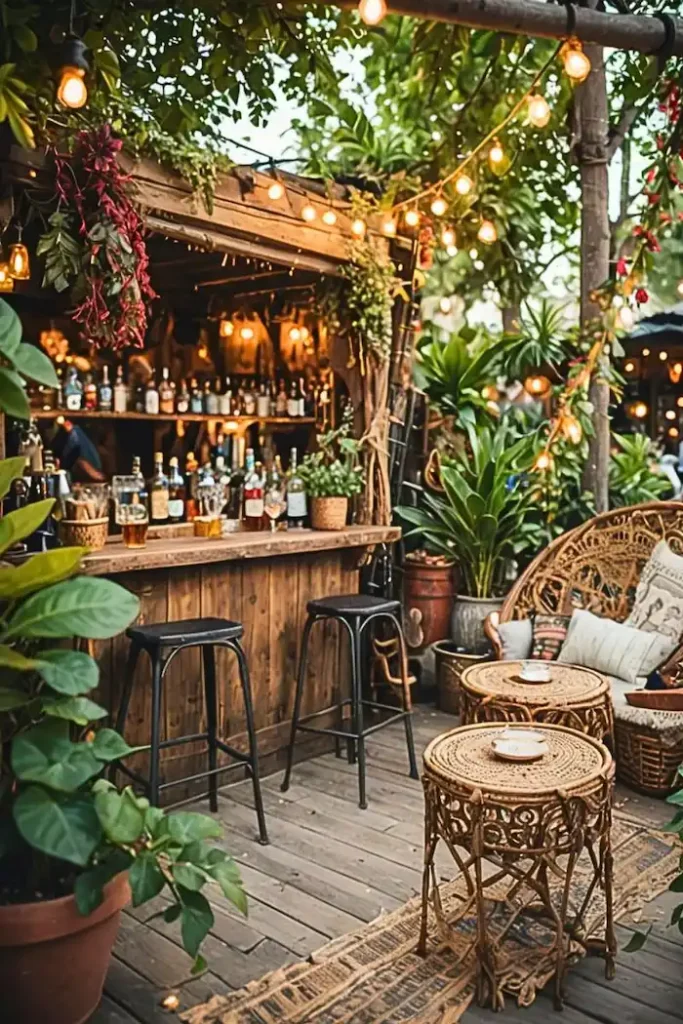
This look is all about atmosphere over architecture. By layering plants, soft textiles, and warm lights, even a basic wooden deck can be transformed into a high-end “speakeasy” garden.
Key Functional Features
- Full-Service Garden Bar: The focal point is a built-in bar with tiered shelving for glassware and bottles. This transforms the patio from a simple seating area into a dedicated entertainment hub.
- Layered Lighting: Warmth is achieved through multiple light sources: large overhead Edison bulbs on string lines, smaller fairy lights tucked into the bar eaves, and glowing lanterns in the background.
- Compact Lounging: By using circular tables and a curved sofa, the layout maintains a flow that encourages intimate conversation without making the deck feel crowded.
Statement Tiles
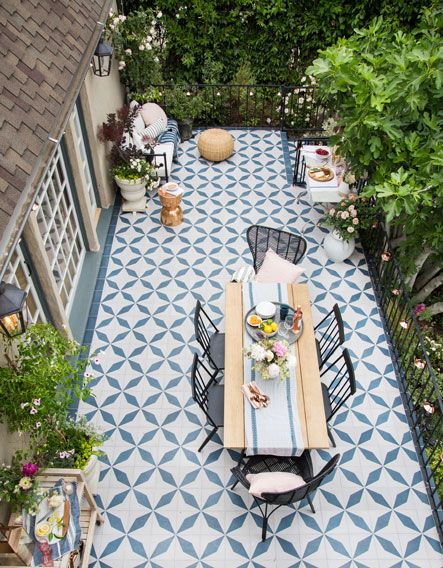
This patio demonstrates the power of bold tiling in small footprints. By choosing a high-impact pattern for the ground level, you can keep the rest of your decor minimalist while still achieving a high-end, designer look. It’s an ideal approach for urban courtyards or long, narrow balconies.
Key Functional Features
- Intentional Social Layout: The long communal table is positioned centrally for group dining, while a smaller seating nook with a white sofa is tucked into the corner for private relaxation.
- Vertical Softening: High black iron fencing serves as a safety barrier but also acts as a trellis for climbing greenery, which provides privacy and softens the hardscape.
- Styling with Textiles: Soft pink cushions, a striped table runner, and woven throws are used to add comfort and a layer of “indoor” sophistication to the outdoor setting.
Fire Pit
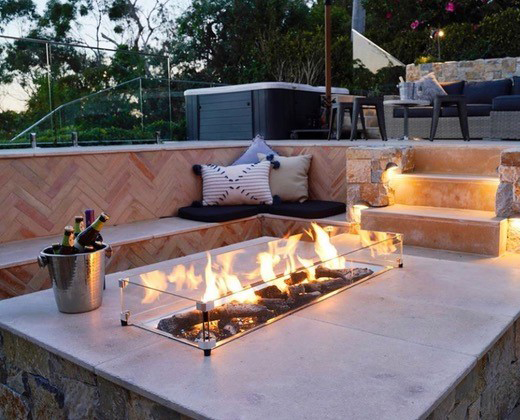
This design is a masterclass in using topography to create intimacy. By building “into” the landscape rather than just on top of it, you can create a sheltered, resort-style atmosphere that feels private even in an open backyard.
Key Functional Features
- Zoned Entertaining: The upper level features a hot tub and additional lounge seating, while the lower level is dedicated to the fire pit. This “tiered” approach allows multiple groups to gather in the same backyard without overcrowding.
- Textured Herringbone Backdrop: The back wall features a light-toned brick or tile in a herringbone pattern, adding a subtle decorative touch that breaks up the solid stone surfaces.
- Comfort & Styling: Plush black seat pads and bohemian-style throw pillows soften the hard stone benches, making the space feel more like an outdoor living room.
Conclusion
In conclusion, a patio is more than just a paved surface; it is a versatile extension of the home that balances high-end aesthetics with everyday utility. By selecting durable materials—whether the raw, industrial appeal of cinder blocks or the refined elegance of natural stone—and defining functional zones for cooking, dining, and lounging, you can transform an underutilized backyard into a sophisticated sanctuary. Through the strategic use of layered lighting, vertical greenery, and intentional furniture choices, even the most compact outdoor space can become a seamless bridge between indoor comfort and the natural landscape.
Final Summary
- Versatility: Patios adapt to any lifestyle, functioning as a kitchen, a social hub, or a private retreat.
- Durability: Using low-maintenance materials like porcelain, concrete, or treated wood ensures long-term value.
- Atmosphere: Small details like string lights, outdoor rugs, and potted plants are what truly define the “room” outdoors.