Floral & Flavor: The Ultimate Guide to an Aesthetic Spring Tea Party
Imagine a garden table where every dish looks less like a recipe and more like a captured moment in a meadow. There is a certain kind of magic that happens when you step away from the stiff, traditional tea party and lean into the organic beauty of botanical entertaining.
Lately, I’ve been captivated by the shift toward “living” decor—using edible flowers, fresh herbs, and rustic textures to create a spread that feels grounded yet completely whimsical. It’s about taking those simple, reliable staples (think crusty baguettes, creamy butter, and classic deviled eggs) and elevating them into works of art with nothing more than a handful of pansies or a sprig of lavender.
Whether you are planning a slow Sunday brunch, a bridal shower, or a quiet afternoon in the garden, incorporating edible florals brings a sensory layer to the table that a standard centerpiece just can’t match.
In this post, we’re breaking down how to style a botanical tea party that feels effortless and intentional. From the viral floral butter boards that are almost too pretty to slice, to the simple trick for turning napkins into a rustic-chic statement, here is how to bring the garden to your table.
In this guide:
- The Botanical Menu: Floral butter logs, pink-dyed eggs, and bloom-topped sweets.
- Tablescape Details: Styling with twine, kraft paper, and wooden textures.
- Edible Flower 101: Which blooms to use and how to source them safely.
The Menu: Savory Meets Botanical
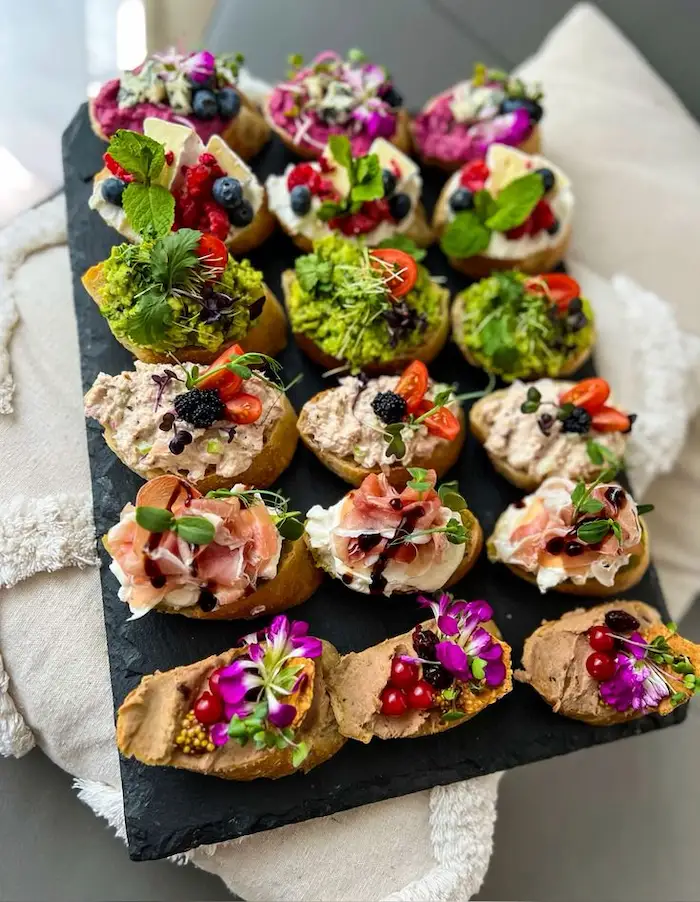
The heart of a modern tea party lies in the balance between effortless preparation and high-impact presentation. By moving away from heavy, traditional crustless sandwiches and toward open-faced crostini and interactive boards, you create a menu that feels light, fresh, and visually stunning.
The New “Butter Board”: Floral Herb Logs
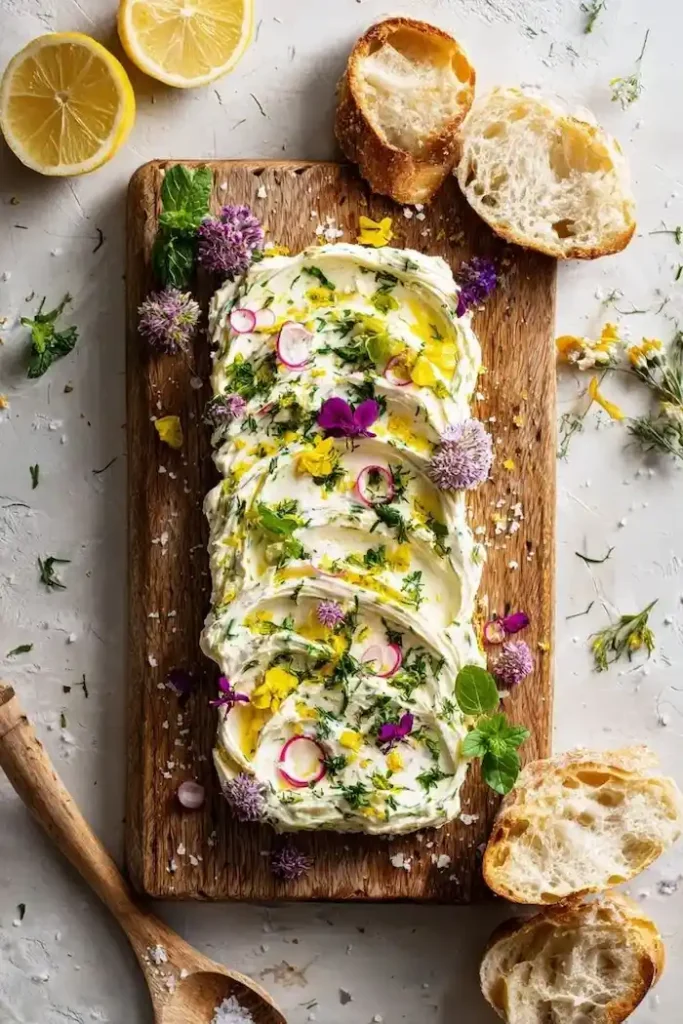
The breakout star of the botanical table is undoubtedly the decorated butter log. Whether you prefer a structured log or a more organic, spreadable board, the technique remains the same.
- The Technique: Start with high-quality, room-temperature salted butter. For a log, roll the butter in parchment paper to form a cylinder and chill until firm. Once set, “paint” the surface with a drizzle of honey or extra virgin olive oil to help your toppings stick.
- The Floral “Mosaic”: Gently press whole pansies, torn chive blossoms, and sprigs of fresh dill or microgreens into the surface. Finish with a generous sprinkle of flaky sea salt and cracked pink peppercorns for a pop of color and texture.
- Serving Tip: Serve with a rustic, crusty baguette. Instead of perfect slices, try “tearing” the bread for a more relaxed, artisanal look that invites guests to dig in.
Elevated Cream Cheese: From Logs to Whipped Rounds
Cream cheese is the ultimate blank canvas for a botanical tea party. It’s sturdy enough to hold its shape, creamy enough to act as an adhesive for delicate petals, and neutral enough to pair with both sweet and savory toppings. Here are two ways to transform a simple block of cream cheese into a high-end appetizer.
Whipped Cream Cheese Rounds with Wildflower Honey
If you prefer something lighter and more spreadable, whipped rounds offer a delicate, cloud-like texture that feels incredibly elegant.
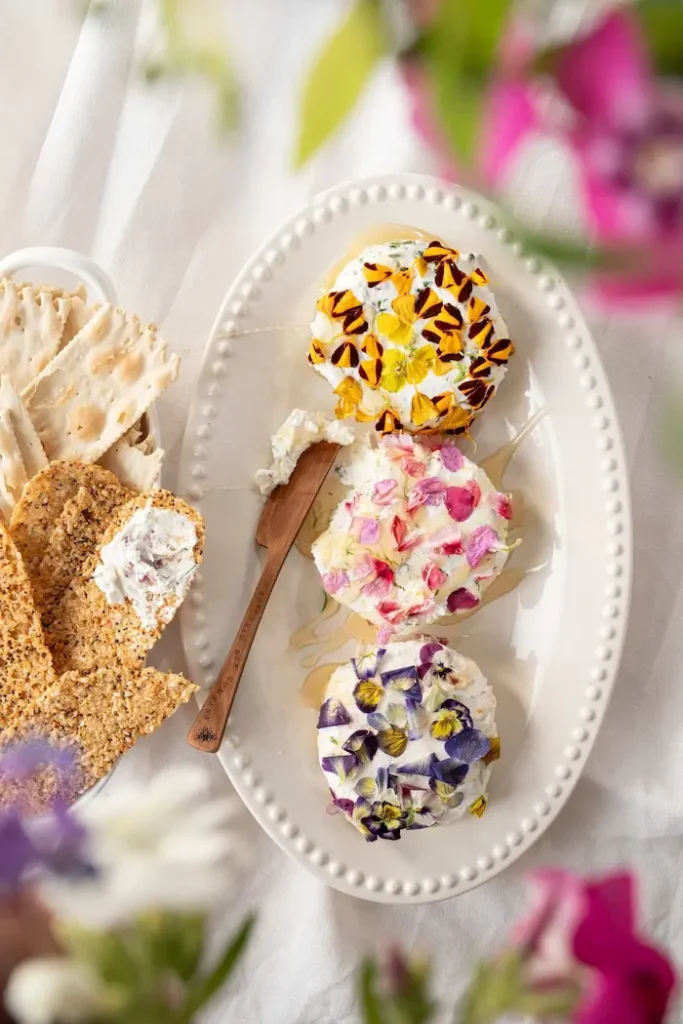
- The Technique: Whip your cream cheese with a splash of heavy cream or Greek yogurt until it’s light and airy. Use a round mold or a simple spoon to create soft, circular mounds on your serving dish.
- The Honey Drizzle: Unlike the log, these rounds are best topped with a generous drizzle of wildflower honey. The honey creates a glossy surface that makes the colors of your edible flowers pop.
- The Floral Arrangement: Because the surface is soft, you can press larger, more vibrant blooms into the cheese. Yellow pansies, orange nasturtiums, and purple pansies work beautifully here to create a “bouquet” effect on each individual round.
- Pairing: These are stunning when served alongside seeded crackers or thin, toasted crisps. The crunch of the cracker against the whipped cheese is the perfect sensory contrast.
Styling Tip: When working with cream cheese, keep your tools (like your palette knife or spreader) slightly warm by dipping them in hot water. This ensures a smooth, professional finish that won’t tear the surface of the cheese.
The Botanical Cream Cheese Log
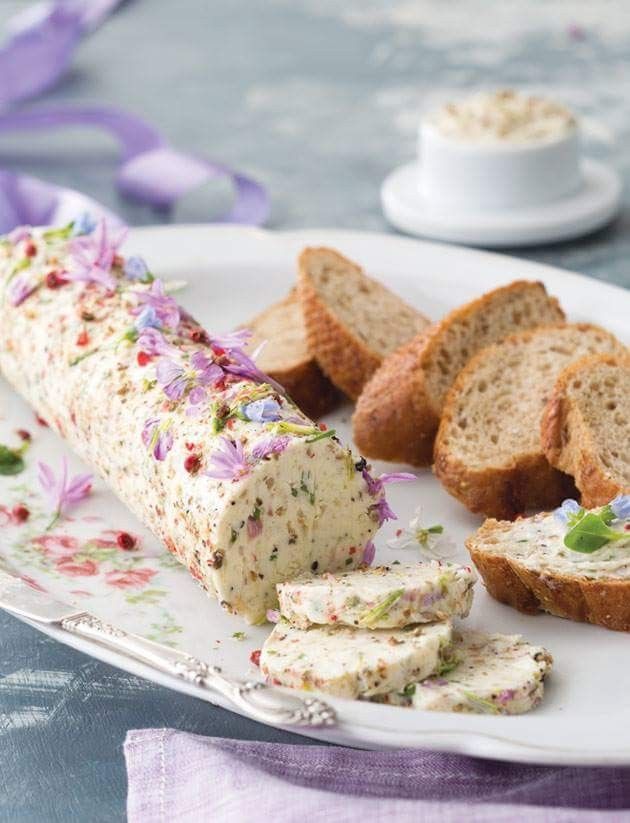
For a rustic, sliceable centerpiece, the cream cheese log is unbeatable. It provides a dense, rich texture that pairs perfectly with warm, crusty bread.
- The Preparation: Start with a cold block of full-fat cream cheese. If you want a more complex flavor, fold in lemon zest and a pinch of sea salt before rolling it into a log shape using parchment paper.
- The “Meadow” Crust: Once chilled and firm, roll the log directly into a bed of dried and fresh botanicals. Use a mix of crushed pink peppercorns, dried lavender buds, and tiny purple violas. The peppercorns provide a surprising “bite” that balances the richness of the cheese.
- How to Serve: Place the log on a vintage ceramic platter and pre-slice a few rounds to show off the interior. Serve with a small spreader and a side of honey for guests who want a sweet-savory finish.
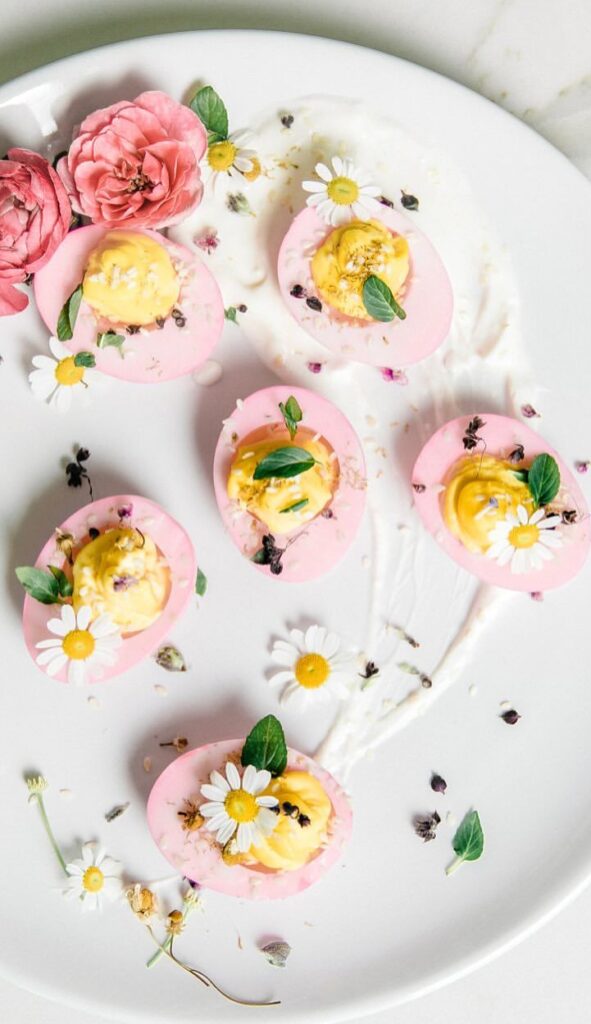
Pink-Dyed Deviled Eggs
Nothing says “Spring” quite like a platter of vibrant, pink-hued eggs. This isn’t just about food coloring; it’s about infusing flavor.
- The Natural Dye: After hard-boiling and peeling your eggs, soak the whites in a mixture of beet juice and vinegar for 30–60 minutes. The result is a gorgeous magenta exterior with a bright yellow center.
- The Garnish: Pipe a classic creamy yolk filling into the centers and top each egg with a single, delicate chamomile flower or a tiny sprig of mint. It turns a humble picnic staple into a sophisticated garden appetizer.
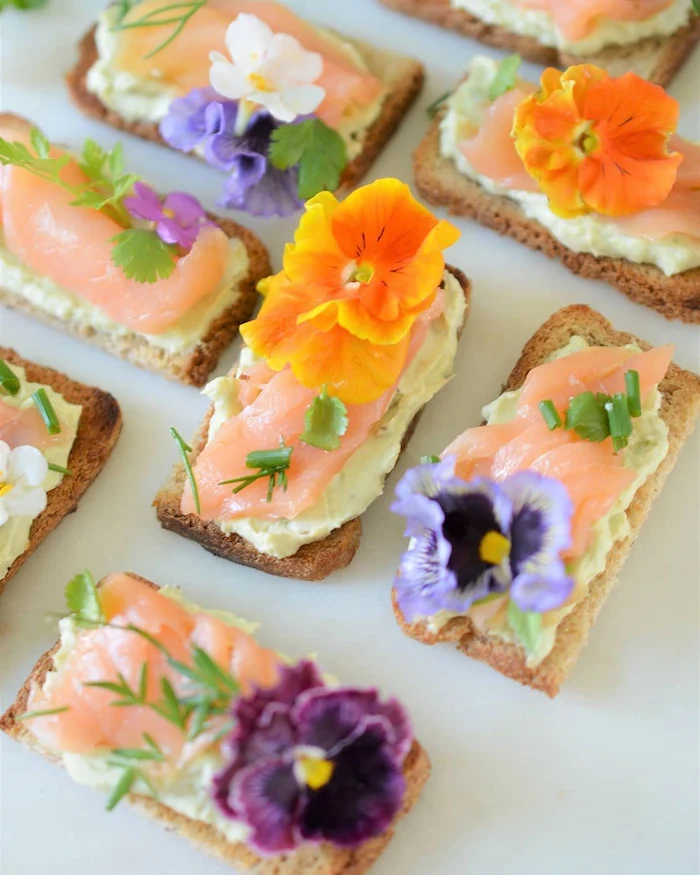
Smoked Salmon & Herb Crostini
For a touch of elegance, these bite-sized toasts offer the perfect canvas for your edible blooms.
- The Base: Use thinly sliced toasted rye or sourdough. Spread a generous layer of herbed cream cheese or whipped feta to provide a smooth, pale background.
- The Assembly: Ribbon a piece of smoked salmon over the top. The coral color of the fish pairs beautifully with vibrant orange nasturtiums or purple violas.
- The Finishing Touch: A few snips of fresh chives or a leaf of flat-leaf parsley add a hit of green that makes the floral colors truly sing.
Styling Secret: When arranging these savory items on your platter, don’t be afraid of “negative space.” Leaving a little room between the crostini or eggs allows the individual floral details to stand out rather than getting lost in a crowded pile.
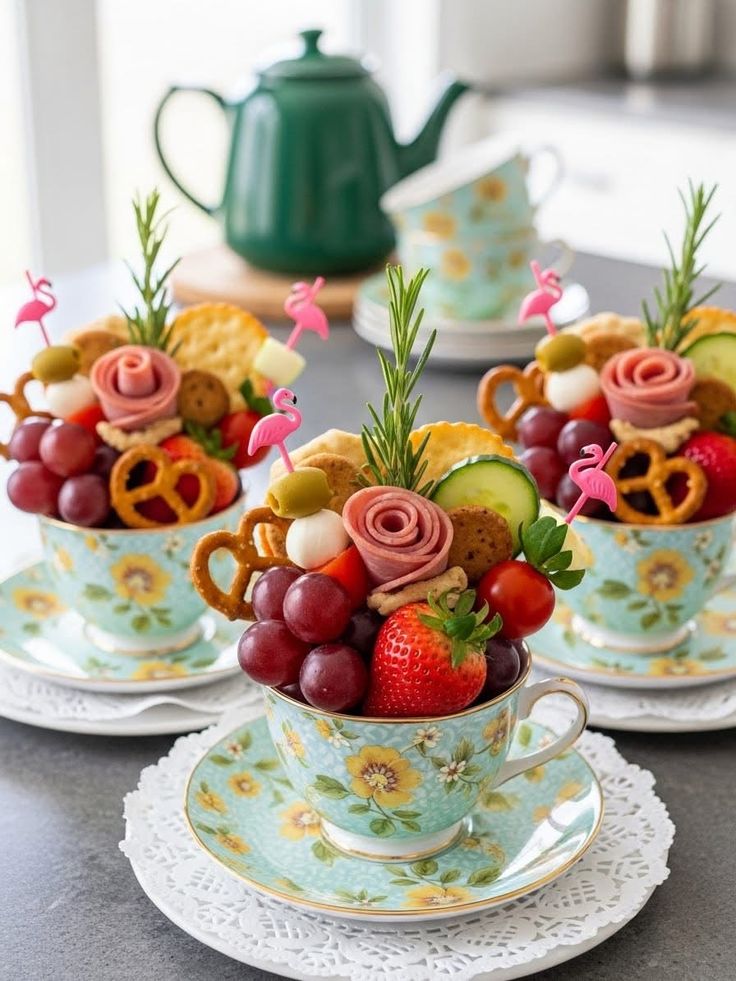
Charcuterie “Teacups”: The Ultimate Individual Grazing
The traditional grazing board gets a whimsical, tea-party-appropriate makeover by moving the elements into vintage teacups. This isn’t just about portion control; it’s about making the food part of the table’s decor.
- The Anatomy of a Teacup Board: Start with a base of grapes or crackers to provide height. Use a toothpick to skewer a “salami rose”—simply fold three slices of salami in half and roll them tightly together.
- The Details: Add a sprig of fresh rosemary to act as a “vertical green” and a bright red strawberry for color. Top it off with a playful cocktail pick (like a pink flamingo) to bridge the gap between “botanical” and “fun.”
- Why it Works: It allows guests to carry their snacks with them as they mingle, keeping the table clean and the presentation tidy.
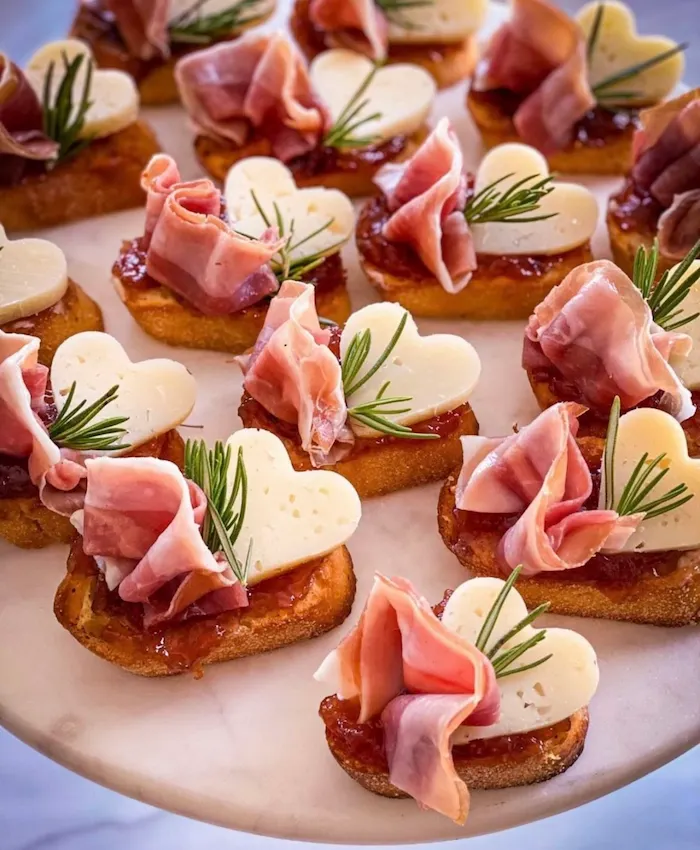
Heart-Shaped Prosciutto & Cheese Bites
For a slightly more romantic or feminine touch, these heart-shaped crostini are an easy win. They take the classic savory-sweet combo of jam and ham and turn it into something artisanal.
- The Base: Use a small heart-shaped cookie cutter to stamp out slices of white cheddar or provolone.
- The Build: Layer a small amount of fig jam or apricot preserve on a toasted baguette slice, top with a ribbon of prosciutto, and crown it with your cheese heart.
- The Herb Finishing: A single needle of fresh rosemary adds an aromatic punch and a touch of deep green.
How to Style Your Breadstick “Bouquet”
To get that high-end, artisanal look, focus on layering different colors and textures across your platter:
- The Savory Bases: Start with a thick, sturdy baguette or breadstick slice to hold the toppings. Use a mix of creamy foundations like whipped feta, herbed cream cheese, beet hummus for a pop of magenta, or a bright pea and mint mash for a garden-green base.
- The “Floral” Toppings: Use your ingredients to mimic the shapes of flowers. Ribboned prosciutto can look like ruffled petals, while halved cherry tomatoes and blackberries add structural “buds” to the arrangement.
- The Finishing Details: Crown each piece with actual edible blooms or micro-herbs. Deep purple pansies, bright yellow violas, and feathery micro-greens create a lush, overgrown meadow look.
- The Drizzle: For a final touch that catches the light, add a tiny drop of balsamic glaze or honey. It adds a professional “glisten” and a hit of acidity to cut through the creamy bases.
Presentation Tip
Arrange these on a dark slate or wooden board to make the vibrant colors of the flowers and vegetables stand out. By clustering different “colors” of breadsticks together, you create a natural, organic flow that looks curated rather than cluttered.
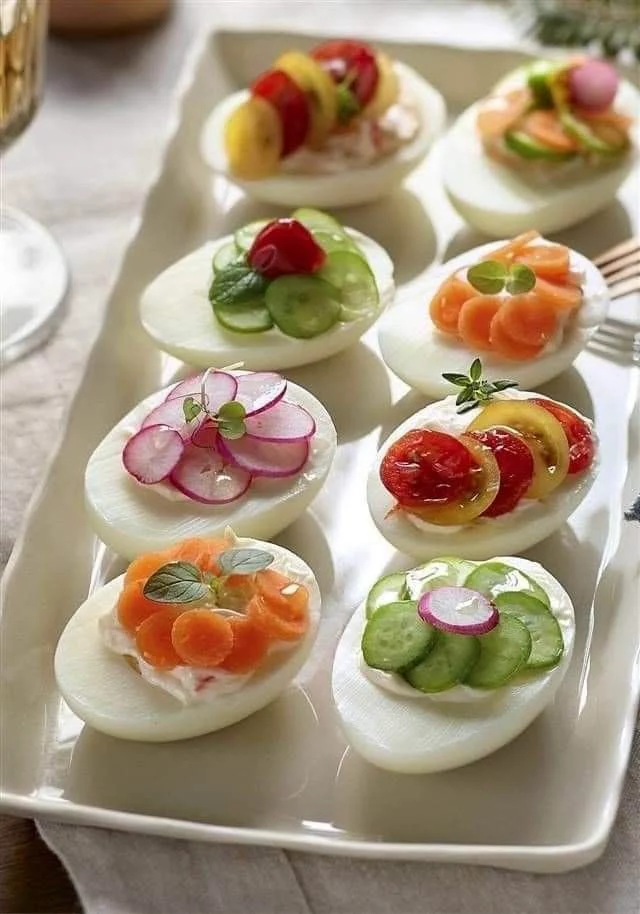
Garden-Fresh Vegetable Medley Eggs
For a bright, crunchy alternative, these vegetable-focused eggs are as refreshing as they are colorful. This is the perfect option for guests who prefer something crisp over something creamy.
- The “Scales” Technique: Use a mandoline to create paper-thin slices of radish, cucumber, and cherry tomatoes. Overlap them on top of a base of whipped cream cheese or traditional yolk filling to create a “shingled” or floral effect.
- Micro-Garnishes: A single leaf of micro-mint or a tiny sprig of parsley on each egg keeps them looking deliberate and professional.
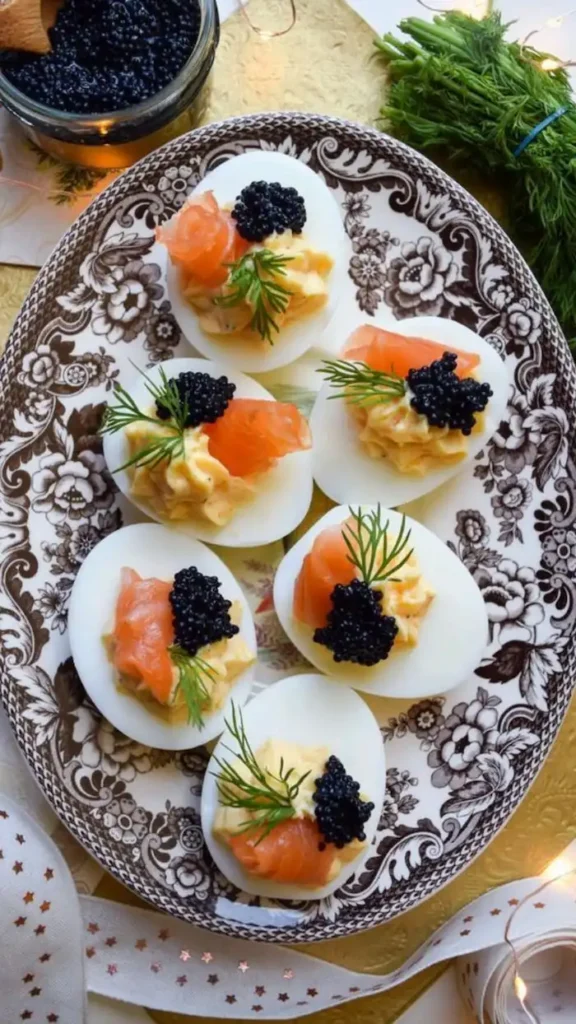
Caviar & Smoked Salmon Eggs: The “High Tea” Standard
If you want to lean into the more formal “High Tea” aesthetic, these deviled eggs are the answer. They feel expensive and sophisticated without requiring hours in the kitchen.
- The Topping: Instead of florals, these rely on luxury textures. Use a dollop of high-quality black caviar (or seaweed-based “cavi-art” for a vegetarian option) paired with a small curl of smoked salmon.
- Styling with Dill: Fresh dill is the unsung hero here. Its feathery texture mimics the look of a wild garden while providing the perfect flavor profile for the salmon.
- Presentation: Serve these on a patterned, vintage-style ceramic plate to lean into the “grandmillennial” charm.
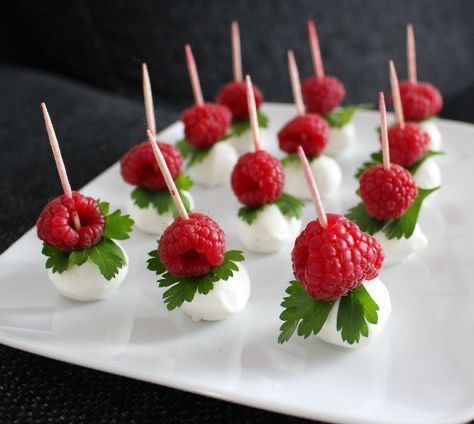
Raspberry & Mozzarella Skewers
Finally, for a “sweet-savory” palate cleanser, these skewers are the simplest way to add height to your platters.
- The Assembly: Skewer a single fresh raspberry, a small leaf of flat-leaf parsley, and a mini mozzarella pearl (bocconcini).
- The Drizzle: These are best served with a tiny side of balsamic glaze or honey for dipping. The white mozzarella and bright red raspberry create a clean, modern look that contrasts beautifully with the more rustic elements of the spread.
Sweet Delicacies: The Botanical Finale
No tea party is complete without a sweet finish, but for a botanical theme, we’re moving away from heavy frostings and toward light, fruit-forward treats that let the natural colors of the garden shine.
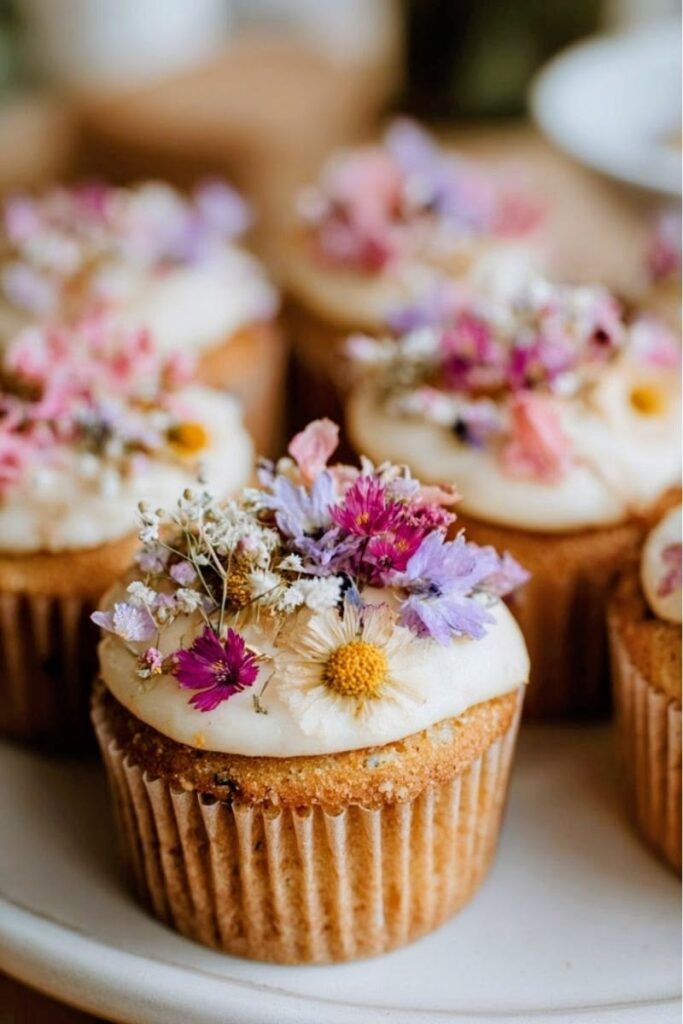
Flower-Topped Garden Cupcakes
Forget the elaborate piping and sprinkles; these cupcakes are all about the “meadow” look.
- The Base: A simple lemon or vanilla bean sponge provides a clean, bright flavor that won’t compete with the floral notes.
- The Frosting: Use a smooth, flat layer of white chocolate ganache or a light honey buttercream. Instead of a tall swirl, a “potted” look allows the flowers to sit flush against the icing.
- The Floral Crown: Group small clusters of dried statice, chamomile, and tiny rosebuds in the center.
- Styling Tip: Using a mix of fresh and dried florals adds a beautiful vintage texture that feels very “Cottagecore.”
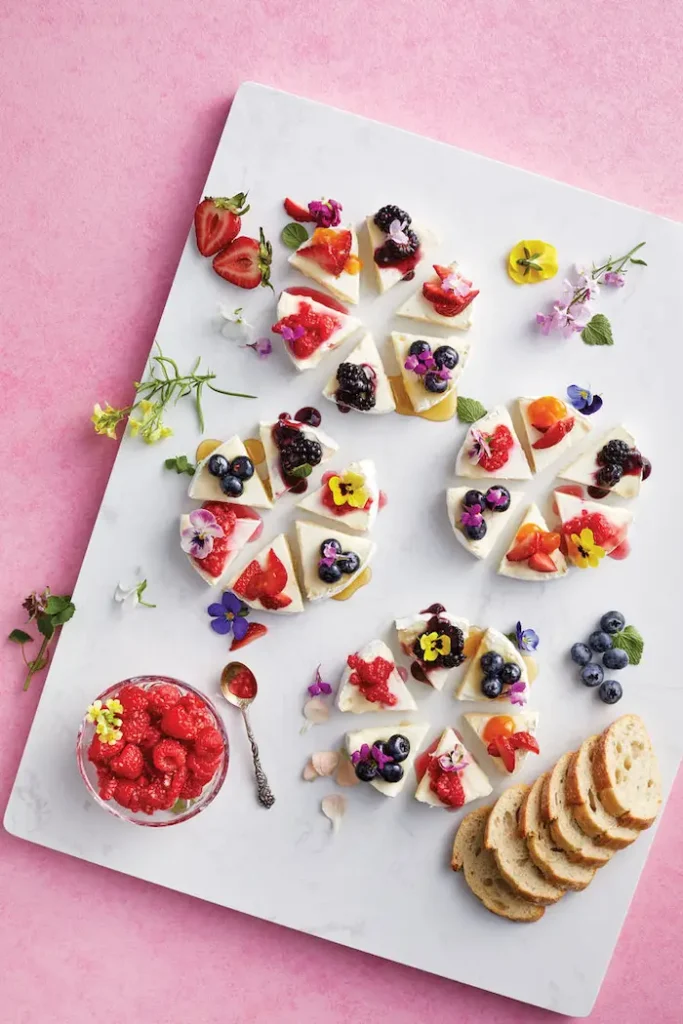
Deconstructed Fruit & Cheese Triangles
If you want something lighter than a traditional cake, this marble-board presentation is a showstopper. It’s essentially a “fruit pizza” reimagined for a sophisticated palette.
- The Foundation: Use triangles of Brie as your base.
- The Fruit Mosaic: Arrange slices of fresh strawberries, blackberries, and raspberries in a radial pattern.
- The Botanical Punch: Drizzle a tiny bit of wildflower honey over the fruit and finish with scattered pansies. The contrast of the deep berries against the white brie and bright petals is incredibly photogenic.
Drink Pairing: The Floral Infusion
To tie the entire menu together, serve a beverage that mirrors the ingredients on the plates.
- Lavender Lemonade: A classic, refreshing choice. The acidity of the lemon actually turns lavender tea a beautiful soft pink.
- Iced Hibiscus Tea: Naturally deep red and slightly tart, it pairs perfectly with the savory smoked salmon crostini.
- The Garnish: Freeze individual pansies or mint leaves into large ice cubes. As the ice melts, the flowers “bloom” in the glass, keeping the botanical theme alive until the very last sip.
Pro Tip: When serving sweet floral treats, a light dusting of powdered sugar over the entire platter can mimic the look of morning dew on a garden bed.
Botanical Place Settings: The “Bouquet” Cutlery Wrap
When you’re leaning into a botanical or cottagecore theme, the table should feel like an extension of the meadow. You don’t need expensive linens to create a high-end look; in fact, a rustic, organic approach often feels more intentional and charming.
By using natural textures like twine, kraft paper, and dried florals, you can turn a functional necessity—your cutlery—into a beautiful decorative element.
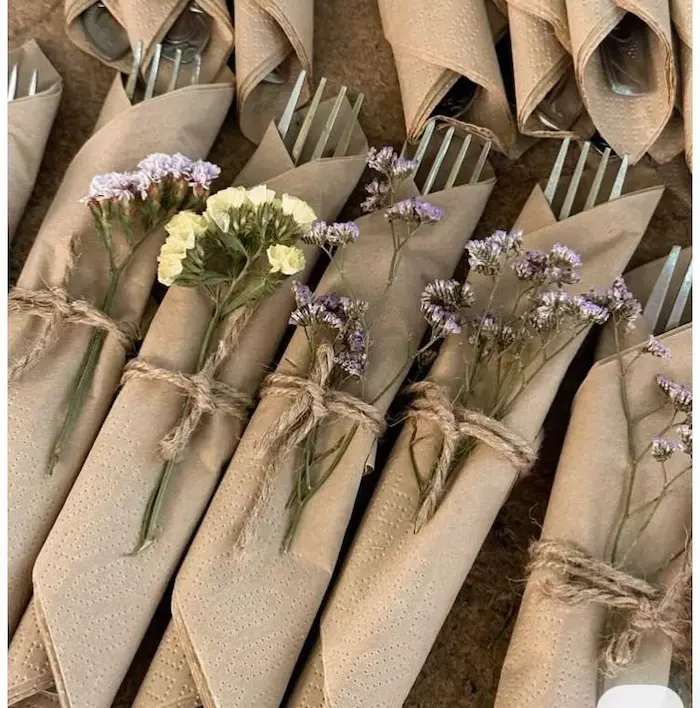
The Kraft Paper & Twine Bundle
This is the ultimate “rustic-chic” look. It’s simple, sustainable, and provides a neutral backdrop that makes your edible floral menu really stand out.
- The Foundation: Use a heavy-duty kraft paper napkin or a small rectangle of brown butcher paper.
- The Wrap: Place your cutlery (wooden or bamboo utensils work best for this aesthetic) in the center. Fold the bottom up and the sides over, securing it with a several loops of natural jute twine.
- The Garnish: Tuck a small sprig of dried statice, lavender, or baby’s breath into the knot. Dried flowers are perfect here because they won’t wilt during the party, and they add a delicate, vintage texture that fresh flowers sometimes lack.
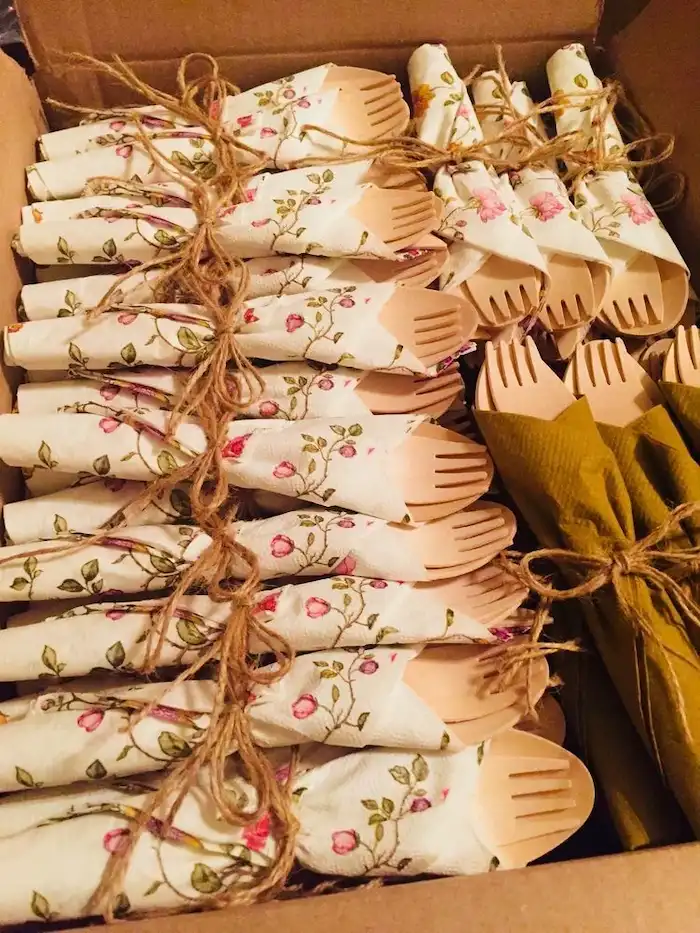
The Floral Print “Pocket”
If you want to add a bit more whimsy and color to your place settings, opt for a floral-patterned napkin.
- Pattern Choice: Look for “micro-floral” or vintage-inspired botanical prints. Soft sage greens, dusty roses, and earthy yellows fit the garden theme perfectly.
- The Styling: Instead of a traditional fold, create a simple pocket for the cutlery. Tie a single piece of twine around the middle and add a sprig of fresh rosemary or a dried strawflower for a pop of 3D detail.
- Layering: Place these bundles directly onto a wooden charger or a simple white ceramic plate to let the pattern be the star of the show.
Pro Styling Tips for Your Tabletop
- Mix and Match: Don’t feel like every place setting has to be identical. Using three different (but coordinating) floral napkins can give the table an organic, “hand-picked” feel.
- Fragrance Matters: Using dried lavender or fresh rosemary in your cutlery wraps adds a faint, pleasant scent that greets your guests as soon as they sit down.
- Keep it Grounded: If you’re using wooden cutlery, ensure it is high-quality and smooth. The contrast of the wood against the soft floral paper is what creates that sophisticated, rustic balance.
A Note on Edible Flowers
Before you start scattering petals across your butter boards, there is a golden rule to botanical entertaining: If you aren’t 100% sure it’s edible and organic, don’t put it on the plate.
Many flowers from traditional florists or garden centers are treated with pesticides not meant for consumption. For a safe and successful spread, always source “culinary grade” blooms from the produce section, a specialty herb grower, or your own chemical-free garden.
Here is a quick guide to the most reliable (and beautiful) edible flowers to elevate your tea party menu.
The Beginner’s Guide to Edible Blooms
| Flower | Flavor Profile | Best Used For… |
| Pansies & Violas | Mild, grassy, slightly sweet | These are the “workhorses” of floral decor. Their flat faces look stunning pressed into shortbread or perched atop a smoked salmon crostini. |
| Lavender | Floral, earthy, citrusy | A little goes a long way. Use the tiny buds to infuse honey or sprinkle over vanilla-frosted cupcakes for a sophisticated scent. |
| Chive Blossoms | Delicate onion or garlic | These purple pom-poms are savory perfection. Pull the florets apart and fold them into your butter logs for a pop of color and flavor. |
| Nasturtiums | Peppery, like watercress | With vibrant oranges and yellows, these add a spicy kick. They are the perfect companion for savory deviled eggs or a garden salad. |
| Borage | Fresh, cucumber-like | Often called “starflower,” these bright blue blooms are refreshing. They are classic in Pimm’s Cups or as a garnish for creamy dips. |
| Cornflowers | Neutral to slightly spicy | Also known as “Bachelor’s Button,” these vivid blue petals hold their color exceptionally well even when dried. |
3 Tips for Floral Success
- The “Damp Paper Towel” Trick: Edible flowers are delicate and wilt quickly once harvested. To keep them perky, store them in a sealed container lined with a damp paper towel in the crisper drawer of your fridge until the very last moment.
- Gently Does It: Before serving, give your blooms a very gentle bath in a bowl of cold water to remove any lingering “garden guests.” Air-dry them on a clean towel so they don’t clump together.
- Know Your Parts: For most flowers, you only want to eat the petals. Remove the green sepals (the base of the flower), stems, and pistils, which can sometimes be bitter or tough.
Pro Tip: If you are hosting guests with severe seasonal allergies (specifically hay fever), it’s always a thoughtful touch to mention which flowers you’ve used, as some blooms are part of the ragweed or daisy families.
Bringing the beauty of the garden to your table doesn’t require a massive budget or professional catering skills—it just requires a bit of intentionality and a love for natural textures. By focusing on botanical details like edible flower-pressed butter, rustic twine wraps, and organic, open-faced appetizers, you turn a standard tea party into a sensory experience that feels both grounded and magical.
The true charm of this “cottagecore” aesthetic is in its imperfection. A slightly torn baguette, a scattering of loose petals, and mismatched vintage teacups all contribute to a lived-in, welcoming atmosphere that encourages guests to slow down and savor the moment.
Whether you’re hosting a grand celebration or a quiet afternoon catch-up, I hope these ideas inspire you to experiment with edible florals and rustic styling.
Quick Botanical Checklist
- Source Safely: Ensure all flowers are culinary-grade and pesticide-free.
- Keep it Cool: Store fresh blooms in a damp paper towel until the very last minute.
- Texture is Key: Balance soft creams and cheeses with crunchy crackers and rustic kraft paper.