How To Throw a Whimsical Maximalist Party Like Rebecca Gardner
In the world of luxury event planning, interior design, and high-end entertaining, Rebecca Gardner is a household name—often regarded as the “doyenne of Southern entertaining”. She is considered a major tastemaker in both Savannah and New York City.
Rebecca Gardner is know as:
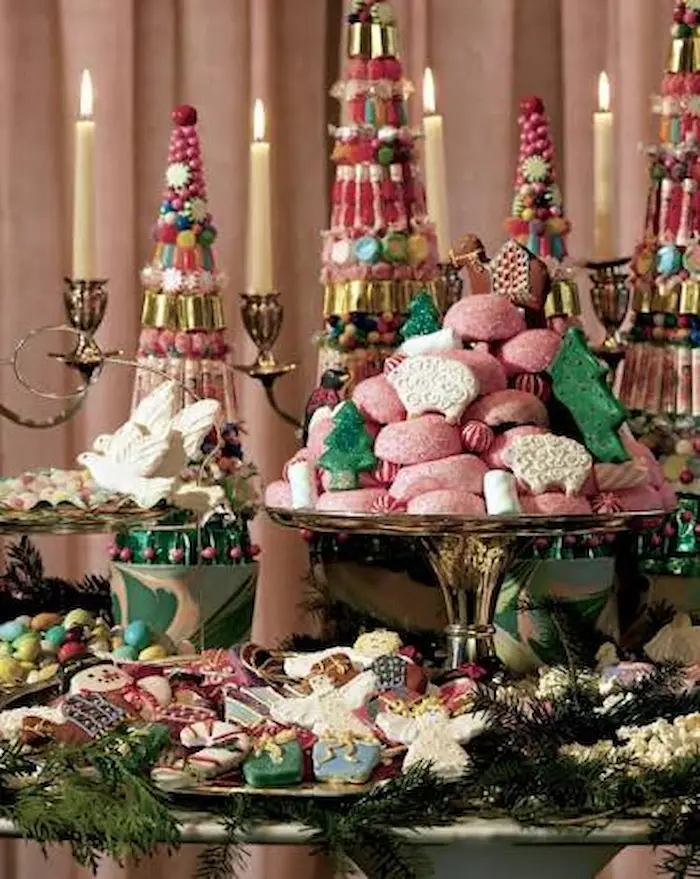
- The “Fairy Godmother” of Elite Parties: She is the founder and creative director of Houses & Parties, a full-service event and interior design collective. She is famous for her “joyfully maximalist,” whimsical, and sometimes beautifully irreverent approach to entertaining—think Marie Antoinette foam wigs, champagne served out of ice-filled kitchen sinks, and towering centerpieces made of Hostess Sno Balls.
- Celebrity & Fashion Devotees: A-list creatives absolutely love her. Director Sofia Coppola famously said, “My dream would be to have Rebecca Gardner in charge of the party committee of my life,” and even wrote the foreword for Gardner’s debut book.
- Media Darling: She is a staple in top-tier design and fashion publications. Her work, events, and personal homes have been prominently featured in Architectural Digest, Vogue, Harper’s Bazaar (which both named her a top event designer), The Wall Street Journal, Elle Decor, and Town & Country.
- E-Commerce & Author Success: In 2020, she expanded her fame by launching an incredibly popular online shop under her brand, selling luxury “unnecessaries” and curated tablescapes (allowing people to buy a whimsical party “soup to nuts”). She is also a published Rizzoli author with her book, A Screaming Blast: Exceptional Entertaining.

Gardner, founder of Houses & Parties, marks occasions with events known for their unabashed style, wit, and whimsy. Here she invites the reader to crash twenty of her parties, from weddings to intimate dinners at home, finding fabulous inspiration at every turn.

Essentially, if someone is throwing an over-the-top, highly personalized, ultra-chic multi-hundred-person wedding, a gala, or an intimate dinner party for the fashion elite, Rebecca Gardner is the absolute gold standard.
Rebecca Gardner’s Journey
Rebecca Gardner’s journey from a party-obsessed kid in Texas to the top tier of the luxury design world is a fascinating masterclass in leaning entirely into a personal aesthetic.
Here is the deeper look at her background, how she built her brand, and where she is operating today:
Where She is From & Her Early Roots
Rebecca grew up in Corpus Christi, South Texas, where she describes entertaining as the absolute “love language” of both sides of her family. She was mesmerized by her parents’ decadent parties and her grandmother’s elegant hosting style (from whom she inherited a love for serving caviar on mini blinis).
She showed her knack for over-the-top styling at an incredibly early age. For her seventh (or eighth) birthday, she meticulously planned a fashion show-themed party where her friends walked a runway taped down the side of her family’s driveway. Her mother fully enabled the vision, tapping a local television newscaster to act as the emcee, while Rebecca closed out the show dressed as a bride in shiny white polyester.
Educational Background & Landing in Savannah
For college, Rebecca headed to the University of Mississippi (Ole Miss) for her undergraduate degree. Afterward, she moved to Georgia to attend the prestigious Savannah College of Art and Design (SCAD), intending to study interior design.
While at SCAD, she began collaborating with local artisans and working on events for the university itself, creating immersive environments and designing interiors. It was during this time that her party-planning “side hustle” completely took off.
How She Got Into the Industry
Rebecca officially launched her business, Houses & Parties, in 2011. While she does design select, high-end residential interiors, it was her boundary-pushing event design that catapulted her to fame.
Her design philosophy became centered around breaking the rules of minimalism. She treats houses and parties as interconnected concepts, believing that a house is ultimately meant to be shared. Her signature style mixes classic, traditional Southern hospitality with “jolts of surprise” and mischief—such as building a life-sized baby elephant out of chicken wire and pink carnations, or creating “Age of Innocence on Acid” themed weddings.
In 2020 when the live events industry ground to a halt, Rebecca pivoted brilliantly. She launched her e-commerce shop, expanding the Houses & Parties brand into luxury tabletop items, curated linens, and humorous party props, making her unique aesthetic accessible to a global audience.
Where She Is Now
Today, Rebecca splits her time between a jewel-box apartment in New York City and a post-WWII International Style home in the Ardsley Park neighborhood of Savannah, Georgia.
- The NYC Vibe: In New York, her entertaining style leans toward a glamorous, Holly Golightly-inspired energy—think cocktail parties with champagne in the bathtub and passed-around pigs in a blanket.
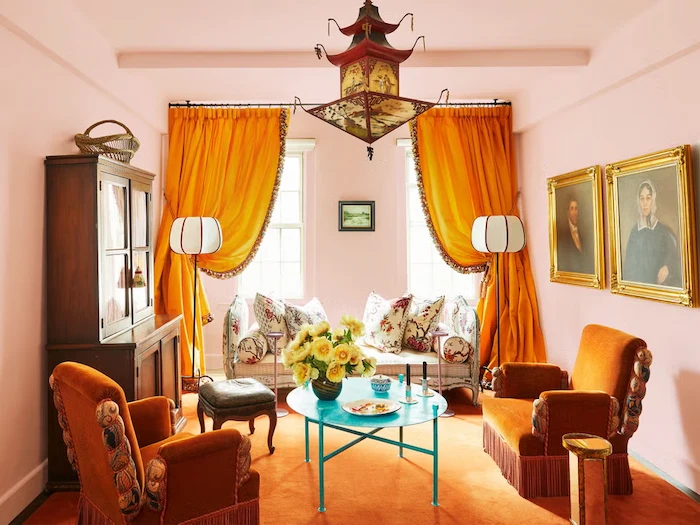
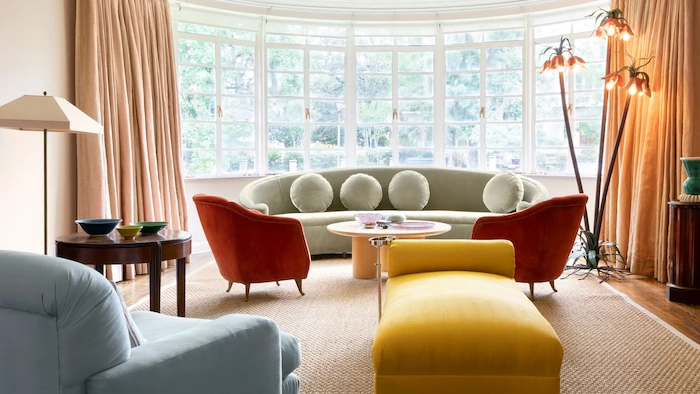
- The Savannah Vibe: In her spacious Savannah home, she throws massive dinner parties surrounded by her curated collection of “dirty pastels” (like martini olive greens and “band-aid” pinks), mid-century modern pieces, and antiques.
She continues to run her multi-city design collective alongside her French bulldog, Percy, keeping a notoriously rigid, pencil-filled day planner to manage her global roster of elite clients, brand launches, and luxury retail collections.
How To Host a Rebecca Gardner Style Party
If you want to host a party in Rebecca Gardner’s iconic, joyfully maximalist style, the blueprint isn’t about rigid etiquette or minimalist perfection—it’s about atmosphere, energy, and a deliberate sense of mischief.
Her style relies on a brilliant “high-low” philosophy (which she describes as combining Timex and Rolex while completely skipping the boring middle).
Here are the specific, actionable tips that she and other high-end tastemakers share for recreating that unforgettable vibe at home:
1. The Atmosphere Blueprint
- “Low Light, Strong Drinks” — This is Rebecca’s ultimate hospitality mantra. She advises hosts to turn off overhead lighting entirely (“avoid it like the plague”) and dim the lamps until the room feels like a “panther’s cave.” Layer the room with a mix of tall candlesticks and short votives so guests are illuminated by flattering, warm light at all heights.
- The “No Scent” Rule — While candle light is mandatory, scented candles are strictly banned if food is being served. She firmly believes the only thing your guests should smell is the dinner.
- Heavy Pours and Easy Drinks — When guests arrive, don’t make them wait for a highly complex, multi-ingredient signature cocktail. Welcome them immediately with a heavy pour of a strong, classic drink (like a cold margarita, an old-fashioned, or a big batch of Earl Grey bourbon punch).
2. The Rule-Breaking Table
- Ban Paper Napkins Completely — Rebecca has famously stated that “nothing says ‘I don’t care’ like a paper napkin.” Real, beautifully pressed, crisp fabric linens are an absolute necessity for any gathering—even a casual Sunday lunch.
- Inject “Lagniappe” (Mischief & Surprises) — Lagniappe is a Cajun word meaning “a little something extra.” To break up the formality of a beautiful table, hide a bit of mischief in the decor to prompt a laugh. She loves hiding tiny ceramic insects peeking out of expensive floral arrangements, or placing hand-marbled party crackers on the plates filled with outrageous prompts (e.g., “Do your best Mick Jagger impression”).
- The “High-Low” Menu — Do not try to serve a hyper-fussy, five-course plated dinner that keeps you trapped in the kitchen. Rebecca leans heavily into her Southern roots, frequently pairing crispy fried chicken and a garlicky green goddess salad with incredibly expensive Champagne. For dessert, skip the massive centerpiece cake and serve easily passed, snackable items like brownies, lemon bars, or fresh strawberries to encourage lingering at the table.
3. The Psychology of the Host
- “You don’t have to make it to make it happen.” — This is a vital rule for keeping your sanity. She advises hosts to outsource, delegate, and order in. Pick the one thing you actually enjoy doing—whether that’s mixing the perfect welcome drink or arranging the flowers—and pay or delegate someone else to handle the rest.
- Never Apologize — If a dish burns or something goes wrong, never draw attention to it or apologize to your guests. Order a pizza, laugh it off, and keep the drinks flowing. If the host acts entirely at ease, the guests will feel at ease.
- Plan Like NASA, then Let Go — She advocates for hyper-detailed preparation leading up to the event (she famously tracks details in pencil in a rigid day planner). But the second the first guest knocks on the door, she says you have to drop the control and just enjoy the ride.
4. How to Guide the Energy
- Mix Up the Crowd — A party is only as good as its guest list. Rebecca notes that no matter how many gorgeous heirloom roses you have on the table, if the crowd is dull, the party is dull. Mix up your social circles and introduce people with thoughtful, specific conversation starters.
- The “Surprise” Cadence — For larger or longer events, aim to introduce a minor element of surprise or delight every 30 to 45 minutes to shift the energy. This could be a dramatic dessert reveal (like sparklers on treats), a sudden parlor game, or ending the night with a printed lyric sheet sing-along.
The Takeaway: Rebecca’s philosophy boils down to a single goal: making sure your guests know their 24 inches of space at the table was created meticulously just for them, with the ultimate goal of having unpretentious, roaring fun.
How to Recreate the Maximalist Aesthetic
True maximalism is often misunderstood as just throwing a bunch of cluttered items into a room or onto a table. In reality, expert designers like Rebecca Gardner view maximalism as a highly disciplined, layered art form.
When done right, it feels rich, historical, and deeply intentional—never chaotic. Here is the breakdown of how to build a high-end maximalist aesthetic using specific design formulas.
1. How to Use Colour: “Dirty Pastels” & Deep Anchors
Maximalist color isn’t just about using bright neons; it’s about unexpected pairing and depth.
- The “Dirty Pastel” Palette: Take classic, sweet pastels and shift them to their muddier, more sophisticated cousins. Instead of baby pink, use a fleshy “band-aid” pink. Instead of mint green, use an olive or murky sage.
- The 60-30-10 Maximalist Shift: In traditional design, you use 60% dominant color, 30% secondary, and 10% accent. In maximalism, you still use a dominant background color to anchor the space, but your 30% and 10% are replaced by a tonal family of contrasting rich shades (e.g., anchoring a room in dark teal, then layering shades of mustard, terracotta, and plum).
2. How to Use Prints: The Scale Formula
Mixing prints is where most people get intimidated. The secret to making multiple patterns live together harmoniously is varying their scale and type. Never put two busy prints of the exact same size next to each other.
To build a flawless print mix, combine three distinct categories:
- The Hero Print (Large Scale): A bold floral, a wide stripe, a large block print, or a historical toile.
- The Geometric/Linear (Medium Scale): A classic check, a chevron, a clean stripe, or a houndstooth. This provides structural relief for the eye against organic shapes.
- The Ditsy/Texture (Small Scale): A tiny polka dot, a small block-printed leaf pattern, or a marbled texture. From far away, this reads almost like a solid color, but up close, it adds incredible depth.
3. The Styling Formulas
Maximalism relies heavily on specific structural formulas so the layers look curated rather than messy.
The Table Styling Formula
For a maximalist tablescape, think of the table as a landscape with varying heights:
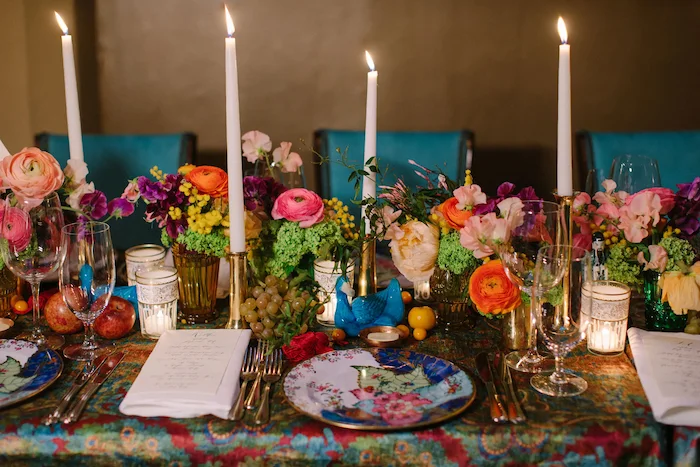
- Patterned Base: A block-printed or ikat tablecloth that covers the table entirely.
- High-Low Vessels: Instead of standard vases, mix tall, elegant candlesticks with unexpected containers like vintage cachepots, silver ice buckets, or ironstone pitchers filled with loose, garden-style flowers.
- Witty Detail: A touch of humor or subversion (e.g., scattered glass bugs, unexpected fruits or vegetables tucked into the flowers, or whimsical hand-painted place cards).
The Theme Formula: “High-Class Rebel”
When building a theme, avoid literal or cheap interpretations (like a standard “Luau” or “Hollywood” night). Instead, pair a highly formal baseline with an irreverent twist:
- The Formula: [Historical/Traditional Period] + [Anachronistic/Playful Twist]
- Example 1: Victorian Elegance + Punk Rock Details (e.g., formal lace tablecloths paired with bright fuchsia candles and graffiti-inspired menu fonts).
- Example 2: Country House Estate + Campy Childhood Nostalgia (e.g., fine antique china serving high-end versions of pigs in a blanket and elevated snack foods).
4. More is More vs. More is Less: Where to Draw the Line
Knowing when to push forward and when to pull back is what separates a designer from a hoarder.
| Dimension | When “More is More” (Dial it Up) | When “More is Less” (Keep it Restrained) |
| Linens & Textures | Pile it on. Use real fabric tablecloths, layered napkins, velvet ribbons, and heavy drapes. Abundance here feels luxurious. | Avoid synthetics. If a texture looks or feels cheap, shiny, or synthetic, remove it instantly. |
| Symmetry | Be playful. Group objects in unexpected numbers (threes or fives) or scatter whimsical details across a surface organically. | Keep the layout functional. The physical placement of plates, chairs, and walkways must remain perfect so the space operates smoothly. |
| Lighting | Multiply the sources. Use dozens of taper candles, votives, and small lamps at different heights to create a warm glow. | Turn off overheads. Harsh, bright overhead lighting completely kills the moody, maximalist illusion. |
| Scent & Sound | Curate the music. A bold, fun, and varied playlist can keep the room’s energy high and dynamic. | Keep it clean. Ban scented candles from areas where food is served. The only scent should be the menu. |
Inspired by these ideas, you can use the following inspiration to bring more Rebecca Gardner maximalist whimsy to your own parties.
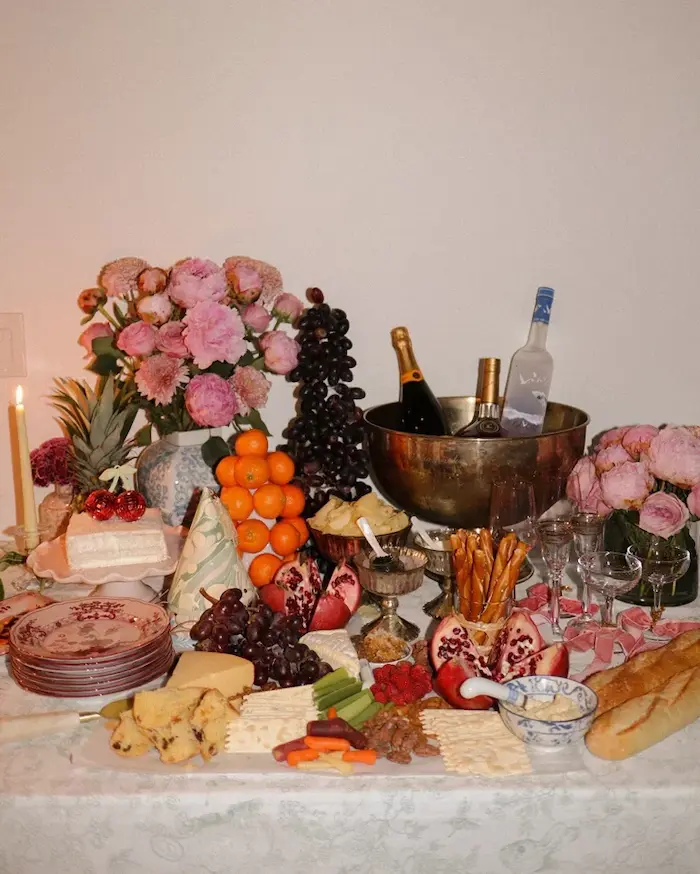
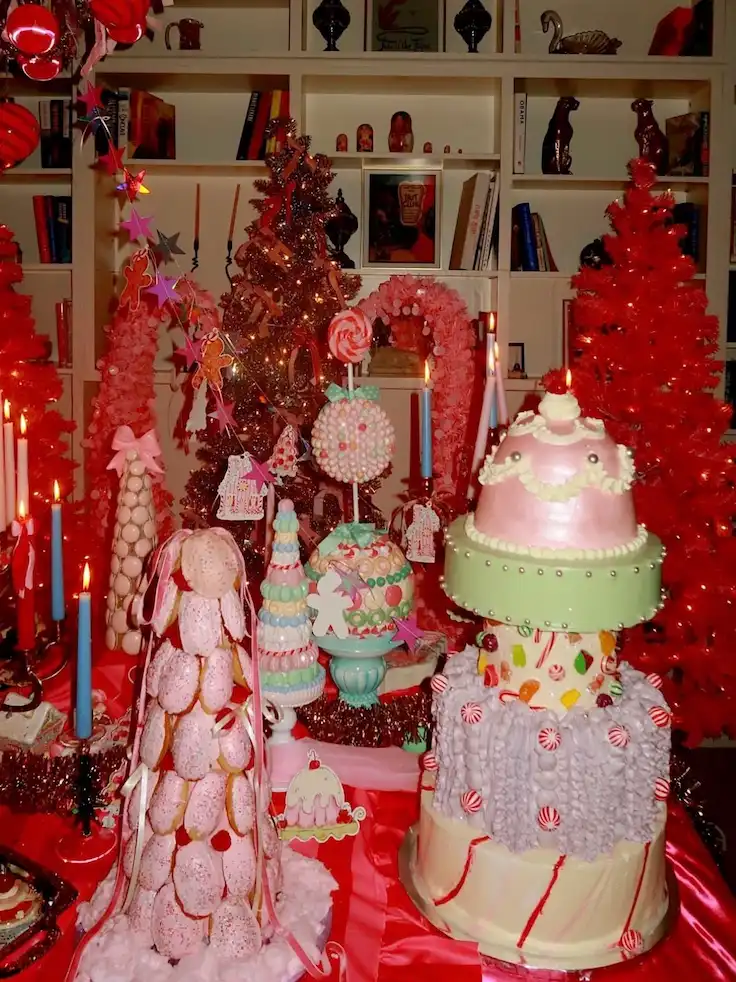
Add Conical Elements
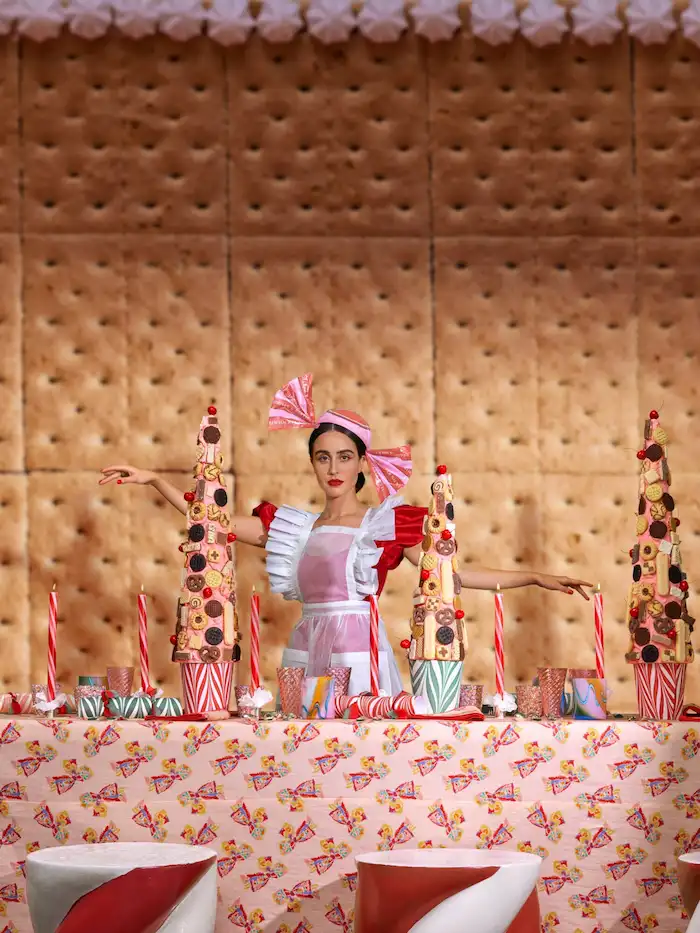
Conical elements add height and drama. Using items that are bright in colour create contrast and drama. You can use fruit, candy, deserts – your limitations are only your own imagination.
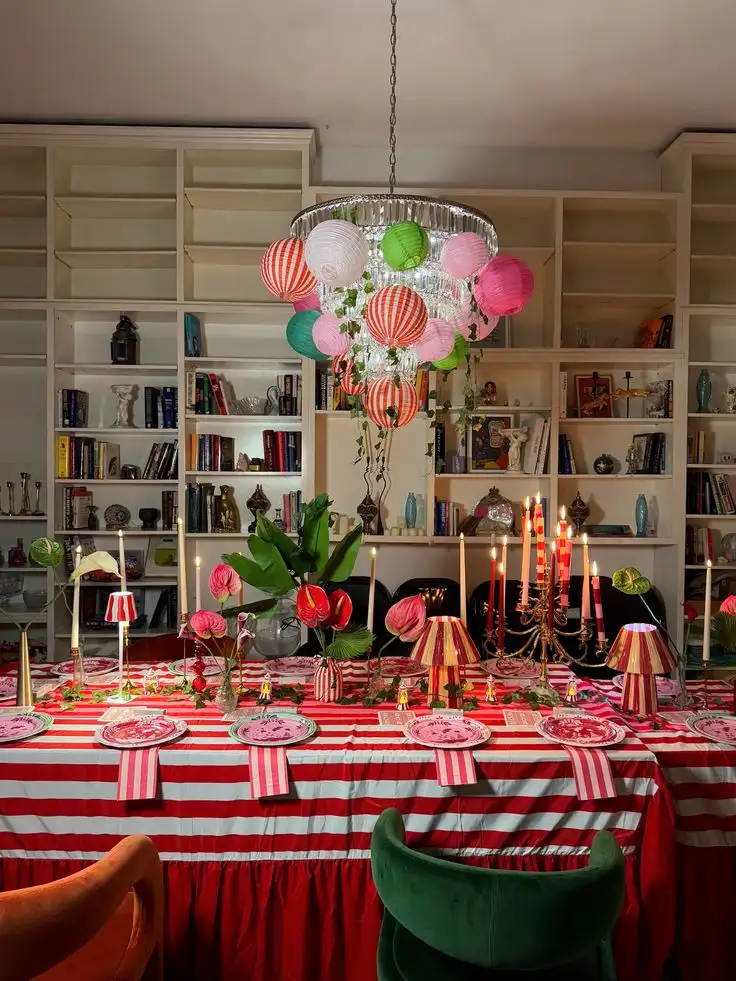
Decorate Light Features in Unexpected ways
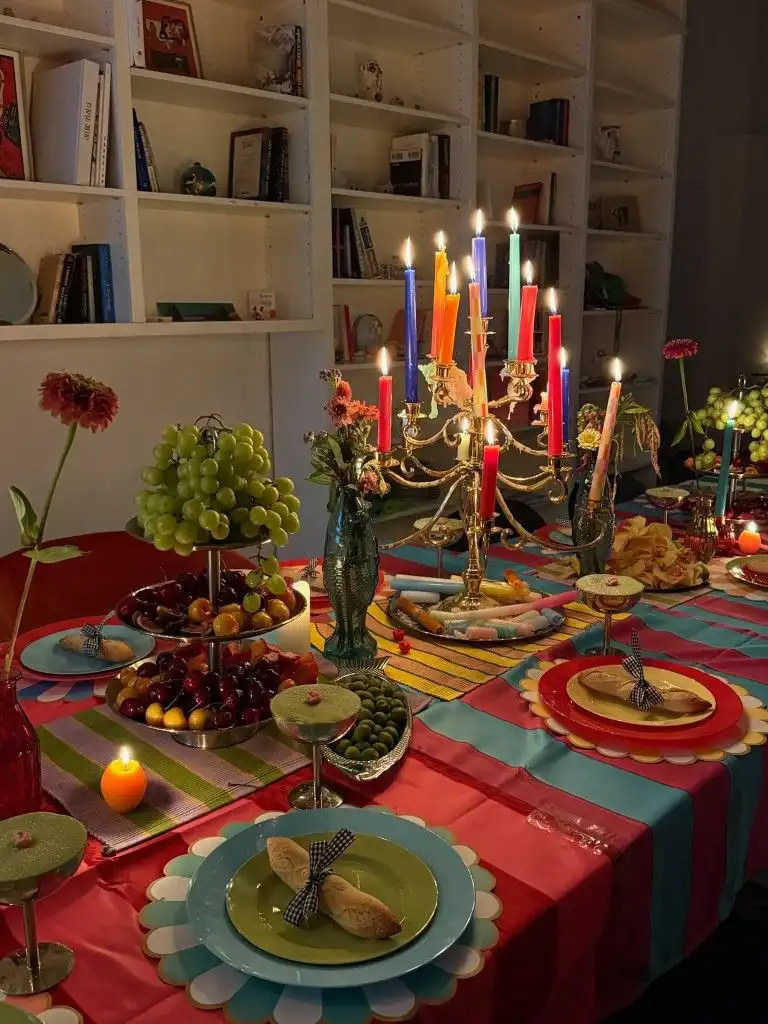
Go Bold With Table Settings
Use bright contrasting fruit on tiered trays for pops of drama.
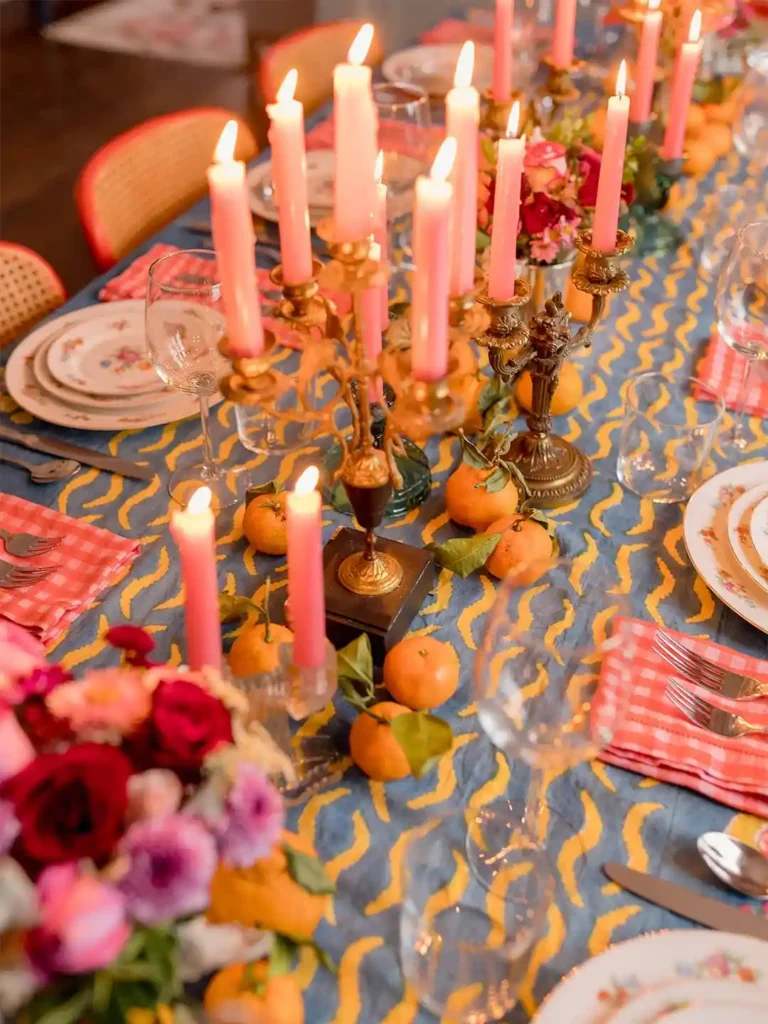
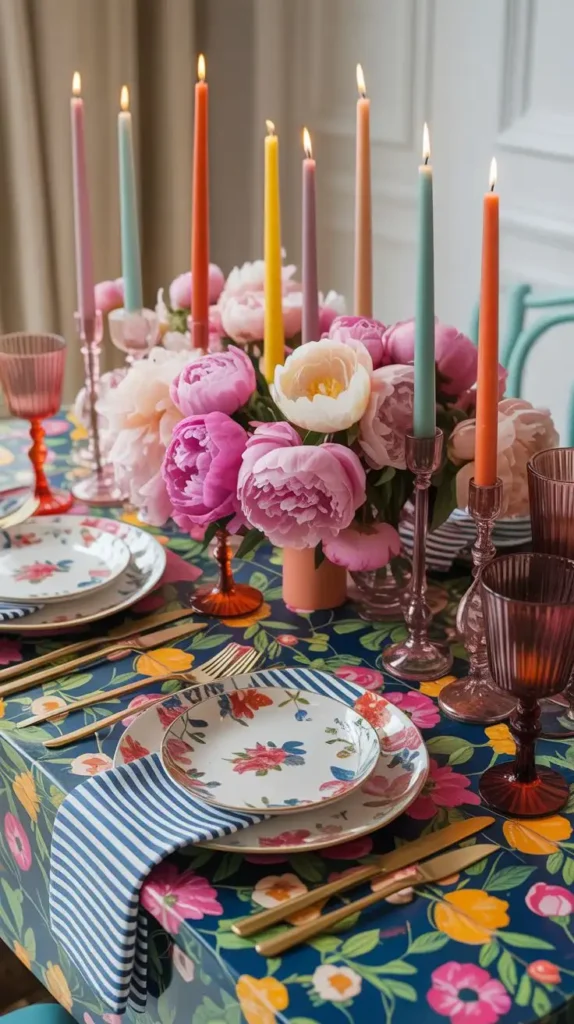
When it Comes to Candles: More is More
Pick Contrasting but Cohesive Colours
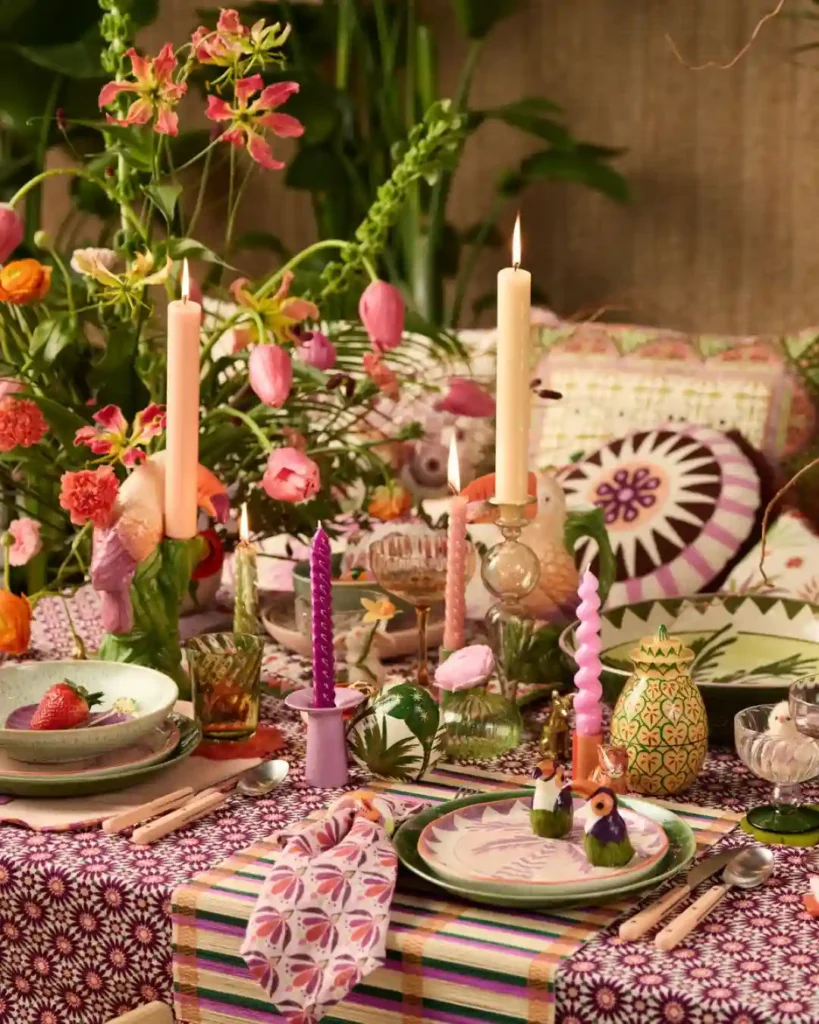
Add Whimsical Elements
This pair of toucan figurines on the plate add an element of whimsy to the table setting. Other details, like the baby chicken in the glass add more playfulness to the setting.
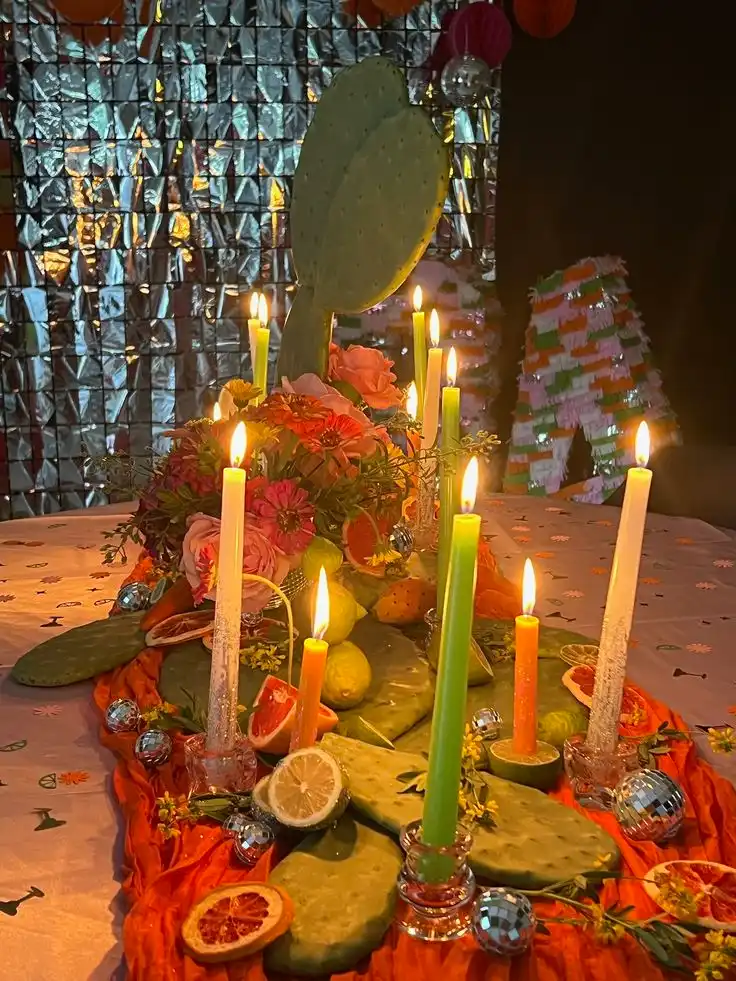
Use Unexpected Elements
The use of unconventional elements like cactus create a bold colour bass and stylistic intrigue.
Use Height and Colour
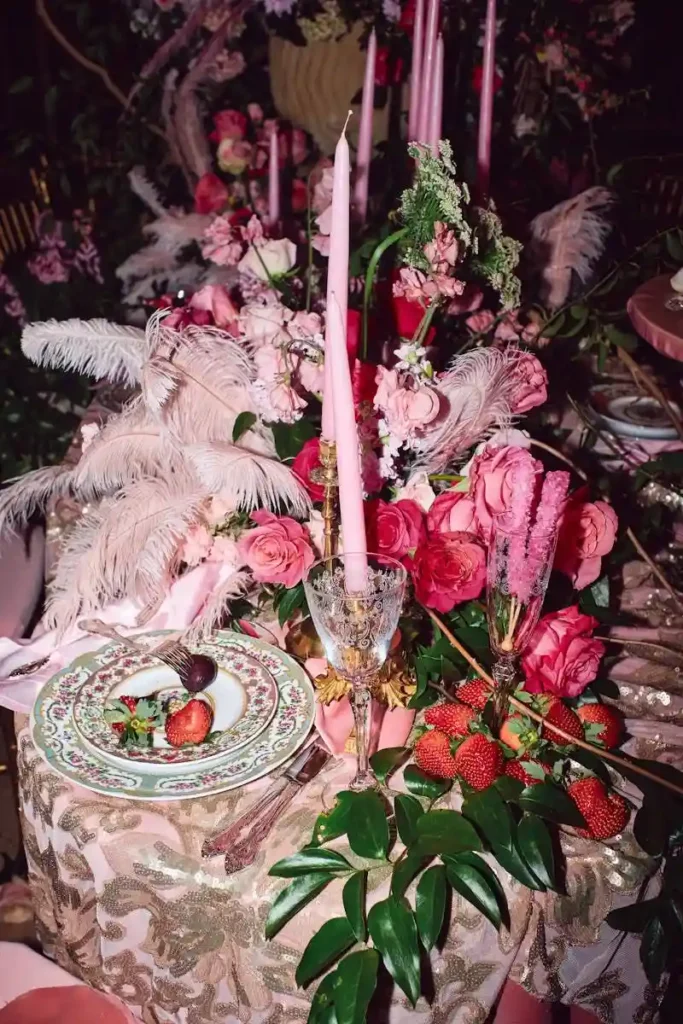
Create Whimsy with Feathers and Foliage
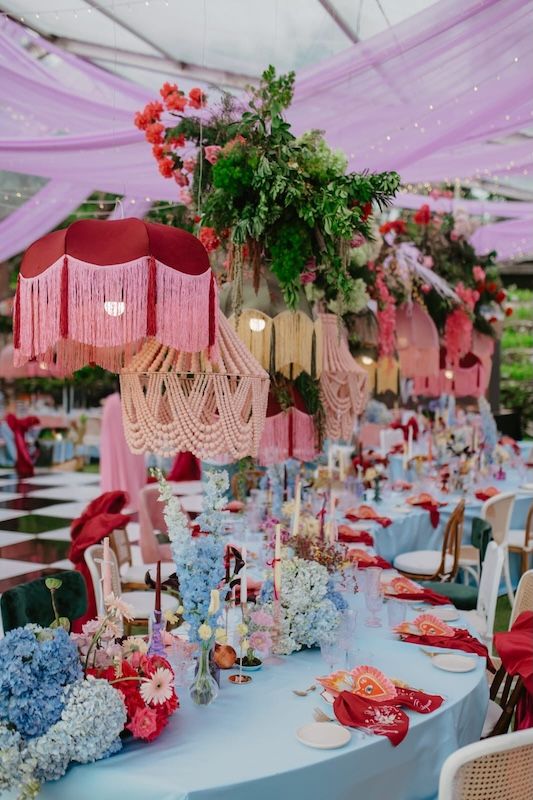
Create Drama with Hanging Lightshades
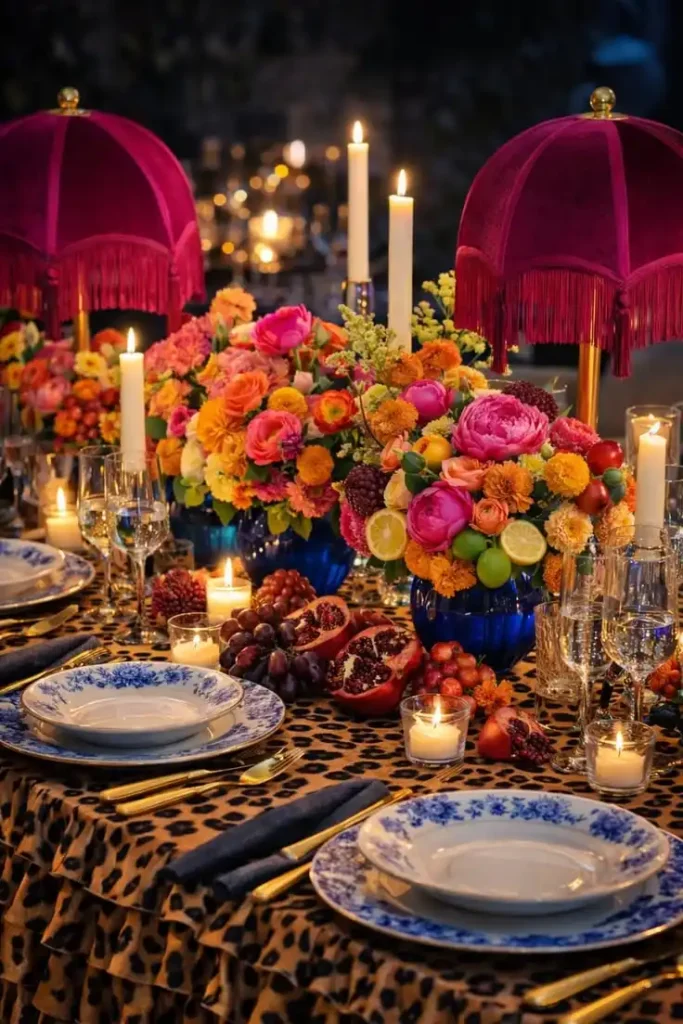
Use Bold Prints, Bright Flowers and Unusual Fruit
Embracing the joyfully maximalist style of Rebecca Gardner is all about leaning into personality, atmosphere, and a delightful sense of mischief rather than striving for minimalist perfection. By balancing a disciplined approach to bold color palettes, mixed prints, and striking textures with relaxed, high-low hosting strategies like low lighting and strong drinks, you can create an unforgettable, immersive experience for your guests. Whether you are adding whimsical touches to your tablescape or throwing an over-the-top celebration, the ultimate goal is to curate a space that feels entirely intentional, deeply welcoming, and wonderfully fun.