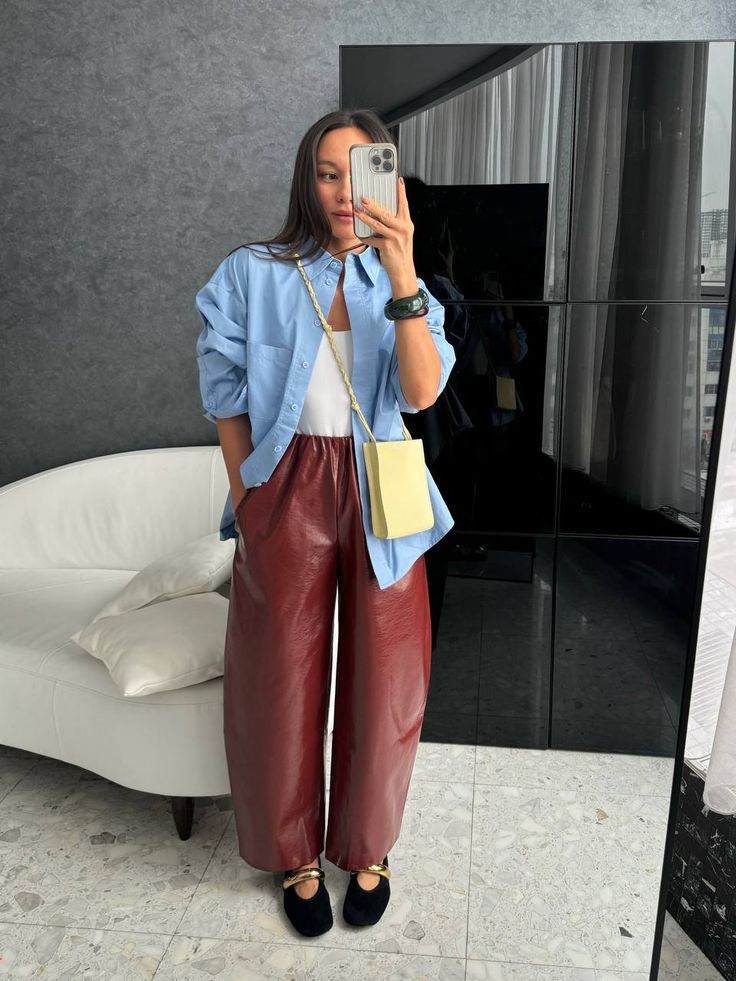
How to be Your Own Stylist based on Your Myers Briggs Personality Type
Viewing personal style through the Myers-Briggs (MBTI) framework allows you to bridge the gap between “what looks good” and “what feels like you.” Rather than dictating specific clothing, MBTI functions as a psychological map of your priorities, which inevitably influences how you curate your closet.
Here is how you can analyze your style decisions through the lens of your MBTI preferences:
1. The Energy Source (E vs. I)
- Extraversion (E): Often uses fashion as a social tool. Style decisions are frequently outward-facing, intended to spark conversation, express energy, or match the “vibe” of an event. You may be more inclined to follow trends or use bold statements to announce your presence.
- Introversion (I): Often prioritizes personal comfort and inner consistency. Style decisions are likely driven by internal standards or self-expression rather than external feedback. You might prefer a “uniform” or signature aesthetic that feels authentic to your private world, regardless of what is currently popular.
2. Information Gathering (S vs. N)
- Sensing (S): Focuses on the tangible reality of a garment. Decisions are driven by sensory details: Does the fabric feel soft? Is the construction durable? Is the fit practical for your daily activities? Sensors often value “timeless” or high-quality pieces that have a clear, functional purpose.
- Intuition (N): Focuses on the “big picture” or the narrative of an outfit. Style decisions are often conceptual—you might dress to embody an archetype, a theme, or an abstract idea. Intuitives are more likely to experiment with eclectic, unusual, or symbolic combinations to express a specific vision.
3. The Decision-Making Process (T vs. F)
- Thinking (T): Prioritizes logic and efficiency. You might build your wardrobe around “systematizing”—creating a capsule closet, choosing pieces that maximize versatility, or sticking to a minimalist palette to minimize “decision fatigue” in the morning.
- Feeling (F): Prioritizes harmony and emotional resonance. Your style decisions are often guided by how a garment makes you feel or the emotions it evokes (e.g., nostalgia, joy, comfort). You may gravitate toward colors or textures that align with your mood or help you connect with others.
4. Lifestyle & World Approach (J vs. P)
- Judging (J): Seeks closure and organization. You likely prefer a planned, “put-together” look. You may have a clear definition of your style and find it satisfying to have everything in your closet coordinate, minimizing the time spent on daily outfit choices.
- Perceiving (P): Seeks to keep options open. Your style might be more fluid or spontaneous. You may enjoy “mixing and matching” on the fly, experimenting with trends as they emerge, or choosing outfits based on how you feel in the moment rather than a pre-defined set of rules.
Viewing personal style through the Myers-Briggs (MBTI) framework allows you to bridge the gap between “what looks good” and “what feels like you.” Rather than dictating specific clothing, MBTI functions as a psychological map of your priorities, which inevitably influences how you curate your closet.
Here is how you can analyze your style decisions through the lens of your MBTI preferences:
1. The Energy Source (E vs. I)
- Extraversion (E): Often uses fashion as a social tool. Style decisions are frequently outward-facing, intended to spark conversation, express energy, or match the “vibe” of an event. You may be more inclined to follow trends or use bold statements to announce your presence. 16 Style Types
- Introversion (I): Often prioritizes personal comfort and inner consistency. Style decisions are likely driven by internal standards or self-expression rather than external feedback. You might prefer a “uniform” or signature aesthetic that feels authentic to your private world, regardless of what is currently popular. Brainmanager.io
2. Information Gathering (S vs. N)
- Sensing (S): Focuses on the tangible reality of a garment. Decisions are driven by sensory details: Does the fabric feel soft? Is the construction durable? Is the fit practical for your daily activities? Sensors often value “timeless” or high-quality pieces that have a clear, functional purpose.
- Intuition (N): Focuses on the “big picture” or the narrative of an outfit. Style decisions are often conceptual—you might dress to embody an archetype, a theme, or an abstract idea. Intuitives are more likely to experiment with eclectic, unusual, or symbolic combinations to express a specific vision. Myers & Briggs Foundation
3. The Decision-Making Process (T vs. F)
- Thinking (T): Prioritizes logic and efficiency. You might build your wardrobe around “systematizing”—creating a capsule closet, choosing pieces that maximize versatility, or sticking to a minimalist palette to minimize “decision fatigue” in the morning.
- Feeling (F): Prioritizes harmony and emotional resonance. Your style decisions are often guided by how a garment makes you feel or the emotions it evokes (e.g., nostalgia, joy, comfort). You may gravitate toward colors or textures that align with your mood or help you connect with others. ResearchGate
4. Lifestyle & World Approach (J vs. P)
- Judging (J): Seeks closure and organization. You likely prefer a planned, “put-together” look. You may have a clear definition of your style and find it satisfying to have everything in your closet coordinate, minimizing the time spent on daily outfit choices. 16 Style Types+ 1
- Perceiving (P): Seeks to keep options open. Your style might be more fluid or spontaneous. You may enjoy “mixing and matching” on the fly, experimenting with trends as they emerge, or choosing outfits based on how you feel in the moment rather than a pre-defined set of rules. 16 Style Types
Applying this to your content strategy
Since you are a creator in the “intentional living” and fashion space, you can leverage these insights to help your readers understand their own “Style Identity”:
- For “Decision Fatigue” Content: Create posts specifically for T-types on building “minimalist capsule wardrobes” that solve for utility and efficiency.
- For “Emotional Expression” Content: Create posts for F-types on “mood dressing” or how to choose colors that align with their current emotional state.
- For “Trend/Experimental” Content: Appeal to N and P types by showcasing how to remix unexpected items or express complex subcultures (like the “Glamoratti” or “Power Cinching” styles you’ve been exploring).
Do you find that your own style currently leans more towards a highly organized, functional approach, or do you prefer a more fluid, expressive way of dressing?
oh my god, i love this. how do i make it into my own style system
To translate this MBTI framework into your own unique style system, you should treat MBTI as the “Psychological Foundation” and your current Style Roots/Subculture expertise as the “Design Language.”
By combining them, you move from just identifying “What I like” to understanding “Why I choose it.” Here is how to structure this into a proprietary framework for your blog:
Incorporating Personality into Your Personal Style System
Systems like Kibbe and Ellie-Jean Royden’s Style Roots help you to understand which visual aeshetics appeal to you. The MBTI is the why behind the what. In this system it can be described as the “Decision Catalyst”.
- The “Design DNA” (Style Roots): The visual aesthetic (e.g., Earth/Mountain/Sun).
- The “Operating System” (MBTI): The underlying motivation for the shopping and styling process.
Style Type Profiles
The Analysts (Logic-Driven Decision Makers)
- INTJ: Decisions are filtered through a “Grand Strategy.” They don’t just buy a shirt; they buy a component for an overall aesthetic vision. If an item doesn’t fit the long-term conceptual goal, it’s discarded.
- INTP: Decisions are filtered through “Logical Consistency.” They often seek a “Uniform” or a system of parts. They may experiment, but only if the experiment serves to refine their internal logic of what “works.”
- ENTJ: Decisions are filtered through “Utility and Power.” Style is a tool for impact. They ask, “Does this garment communicate the authority or competence I need for my current goals?”
- ENTP: Decisions are filtered through “Innovation and Possibility.” They love the “new” and the “unconventional.” Their style is a laboratory—they will adopt a subculture just to deconstruct it, then move on when it no longer feels intellectually stimulating.
The Diplomats (Value-Driven Decision Makers)
- INFJ: Decisions are filtered through “Symbolism and Identity.” They dress to embody an archetype or a narrative. Their closet is a collection of “costumes” that represent different facets of who they are internally.
- INFP: Decisions are filtered through “Authentic Resonance.” They ignore trends entirely. If a piece doesn’t spark an immediate, deep emotional connection, it won’t be worn, even if it’s perfectly constructed.
- ENFJ: Decisions are filtered through “Social Harmony and Perception.” They are highly aware of how their style is “read” by others. They curate their look to foster connection and signal belonging to their desired community.
- ENFP: Decisions are filtered through “Self-Expression and Vitality.” They dress to feel a certain way. If they feel stagnant, they will change their entire aesthetic to jumpstart their internal energy.
The Sentinels (Stability-Driven Decision Makers)
- ISTJ: Decisions are filtered through “Reliability and Precedent.” They favor high-quality, proven classics. They don’t like “style experiments” because they feel like a waste of time and resources.
- ISFJ: Decisions are filtered through “Care and Comfort.” They focus on how a garment treats them and how it makes their daily life easier. They gravitate toward things that feel “safe” and dependable.
- ESTJ: Decisions are filtered through “Standardization and Order.” They want their closet to function like a well-oiled machine. They value crispness, structure, and things that look professional without high maintenance.
- ESFJ: Decisions are filtered through “Context and Appropriateness.” They excel at “situational dressing”—they know exactly what is expected of them in any environment and find satisfaction in meeting (or slightly elevating) that expectation.
The Explorers (Action-Driven Decision Makers)
- ISTP: Decisions are filtered through “Function and Tactile Interaction.” They are the most likely to care about the “engineering” of a garment—pockets, durability, movement. If it doesn’t perform, it’s not staying.
- ISFP: Decisions are filtered through “Sensory Experience.” They are the ultimate “Artisans.” They prioritize how colors, textures, and silhouettes feel in the present moment. They are the most likely to have a “fluid” style that changes with their mood.
- ESTP: Decisions are filtered through “Immediate Impact and Presence.” They want to look good now. They are the masters of reading the room and adjusting their look to be the most stylish or relevant person in the immediate vicinity.
- ESFP: Decisions are filtered through “Engagement and Joy.” They use style to heighten the experience of life. They gravitate toward what is vibrant, fun, and expressive. Their style is an performance intended to bring energy to their surroundings.
Part 1: Fashion & Energy (E/I)
1. When you receive a compliment on your outfit, do you:
2. When shopping for clothes, do you prefer:
3. When discussing fashion with others, do you:
4. When you wear a bold outfit to a social gathering, do you:
5. Your ideal fashion activity is:
6. Does talking out loud about your wardrobe plans:
7. When you discover a brand new style trend, are you:
8. If you see someone close to you making a clear fashion mistake, are you:
9. Do you honestly feel “at your best” style-wise when:
10. After a long, fashion-heavy party or gathering, do you:
Part 2: Fashion & Information (S/N)
11. When you first look at a garment, your eyes immediately notice:
12. When getting dressed in the morning, do you primarily focus on:
13. When you think about your overall personal style, do you prefer:
14. In the fashion world, are you genuinely more interested in:
15. When describing a specific look to a friend, do you naturally use:
16. Is your ongoing day-to-day wardrobe focus heavily centered on:
17. When you head out to shop for clothes, do you usually:
18. In terms of your personal style rules, do you deeply value:
19. For you, the act of assembling a personal style feels like:
20. When you load up a lifestyle or style blog, do you prefer:
Part 3: Fashion & Decisions (T/F)
21. If you buy a premium garment online and find a minor flaw, you are instantly:
22. When critically assessing a style choice, your standard is primarily:
23. When building out your seasonal wardrobe system, you prioritize:
24. In your eyes, a wardrobe setup completely “fails” if it:
25. When a close friend asks you for urgent outfit help, you naturally:
26. You deeply admire someone’s personal style more when it is:
27. When deciding whether to buy a luxury item, you are guided by:
28. When you are feeling highly stressed out, do you naturally:
29. Your ultimate, dream closet setup is best described as:
30. You fundamentally prefer fashion choices that feel:
Part 4: Fashion & Structure (J/P)
31. When finalizing an outfit for an event, you typically:
32. Facing a visually messy, chaotic closet causes you:
33. You officially consider yourself “ready to go” when:
34. You prefer your signature personal style presence to be:
35. When encountering a viral online style challenge, you:
36. For you, sticking to a strict wardrobe plan or uniform feels:
37. When you systematically look for clothing online, you:
38. Your ongoing schedule for organizing your wardrobe is:
39. If a striking new subculture trend blows up, you usually:
40. When making final purchasing decisions on clothes, you prefer to:
Your wardrobe is more than just a collection of clothes you happen to grab on your way out the door—it is an outward reflection of how your mind processes the world. By understanding your MBTI style operating system, you can stop fighting against trends or capsule closets that don’t suit your nature, and instead build a wardrobe that genuinely honors how you think, feel, and make decisions.
Whether you are an analytical strategist curating a high-efficiency capsule or an intuitive visionary experimenting with narrative outfits, the goal is always the same: bridging the gap between what looks good and what feels like you.